How to Read Cordyceps Labels in Europe
A practical guide to what 'Cordyceps' really means on a supplement label: species identity, fermented mycelium versus fruiting body, cordycepin claims, fermentation process and EU Novel Food risk. A single cordycepin number is never the whole story.
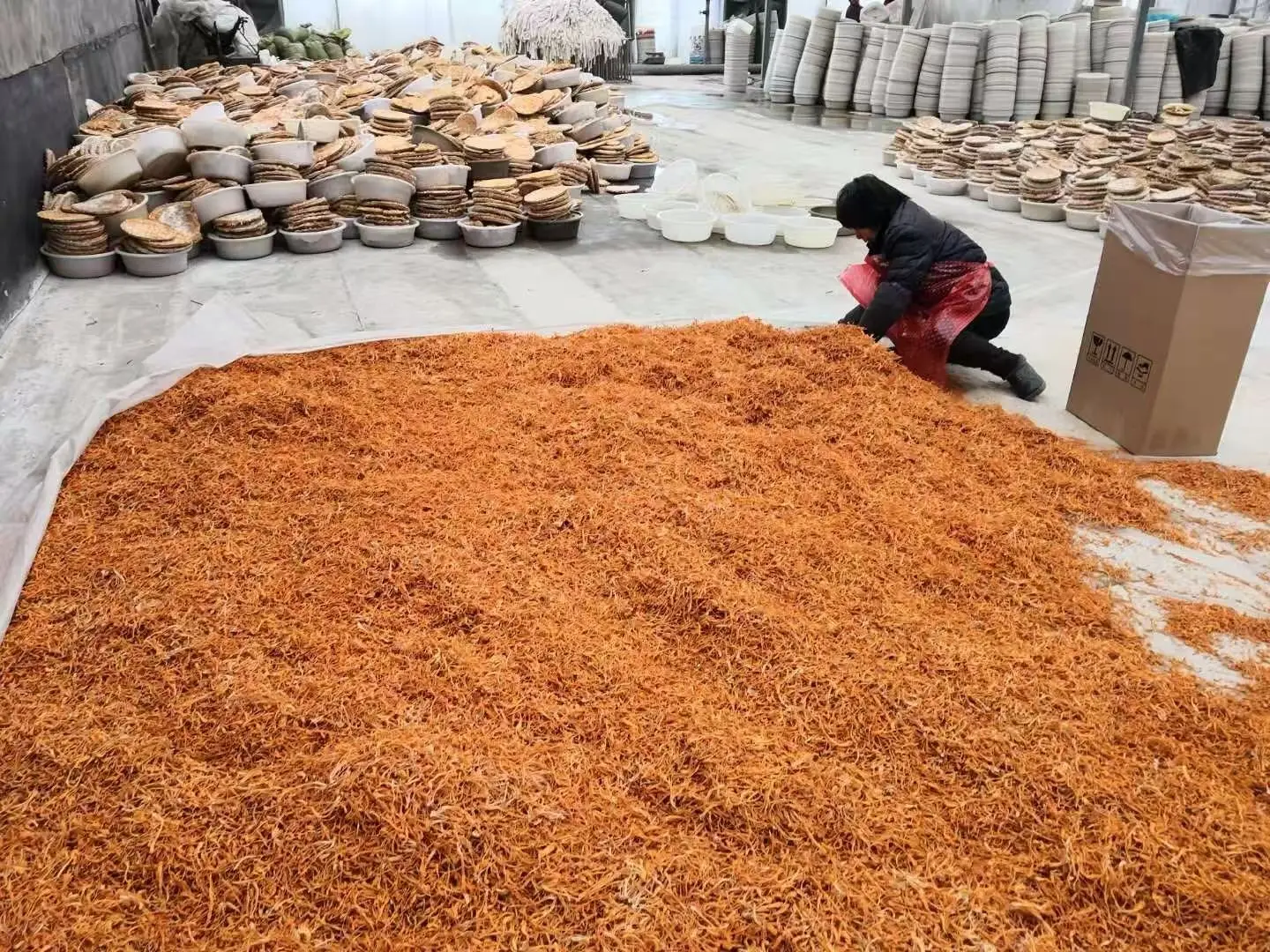
Species, Mycelium, Cordycepin, and Novel Food Risk.
1. Why Cordyceps labels are hard to read
Pick up almost any Cordyceps supplement sold in Europe and the label will say something like: Cordyceps sinensis extract, 500 mg. Maybe it adds a polysaccharide percentage. Maybe it claims cordycepin. The word “Cordyceps” is used as if it settles the question. It does not.
In practice, that single label phrase may refer to very different materials:
| Label wording | What it may actually mean |
|---|---|
| Cordyceps sinensis extract | Could be a fermented CS-4 / Paecilomyces hepiali extract, not wild caterpillar fungus. |
| Cordyceps sinensis mycelium | Usually a fermented mycelium product, often CS-4 / Paecilomyces hepiali-type material. |
| CS-4 | A strain isolated from natural O. sinensis-related material and produced by fermentation. In commercial supply-chain terms it is Paecilomyces hepiali (蝙蝠蛾拟青霉), not true wild Ophiocordyceps sinensis. |
| Cordyceps militaris | Cultivated 蛹虫草; the main commercial natural source of meaningful cordycepin. Faces EU Novel Food issues in supplement applications. |
| Cordyceps biomass / myceliated substrate | Fungal biomass grown with solid substrate; may contain grain, starch, or substrate residues alongside true fungal material. |
| Cordyceps extract 10:1 | May be a water extract, a spray-dried extract with carriers, or a poorly defined concentration claim. The ratio alone says little about quality. |
| High cordycepin | Could indicate Cordyceps militaris fruiting body material, purified or isolated cordycepin, or a species-marker mismatch. A high number alone does not explain how the number was achieved. |
These materials should not be assumed to have the same biological relevance, clinical evidence, or regulatory status in Europe.
Cordycepin is not just a quality number. It is a clue. If the species, fermentation process, legal status, powder appearance, analytical result, and label wording do not match each other, the label may create more confusion than transparency.
2. True wild Cordyceps: fungus plus insect, not a normal mushroom
The traditional material known in Chinese as Dong Chong Xia Cao (冬虫夏草) literally means “winter worm, summer grass.” The name comes from the old observation that the material appears as an insect-like body in winter and a grass-like stroma in summer. It is a traditional description, not a modern biological definition.
What it actually describes is a fungus-insect complex. Ophiocordyceps sinensis infects the larva of ghost moths, primarily Thitarodes species, living in high-altitude soils, typically 3,000 to 4,500 metres above sea level across the Tibetan Plateau and neighbouring provinces including Qinghai, Sichuan, Yunnan, and Gansu.
Spores released from mature stromata can infect ghost moth larvae underground. The fungus enters and colonises the larva from the inside, eventually killing it. A slender fruiting stroma then emerges from the head of the dead larva. As the stroma matures, it releases spores that can continue the cycle. The harvested product is the desiccated larval body fused with the dried fungal stroma. [1,2]
People often describe this as fungal “mind control.” That phrase is vivid, but scientifically it is safer to say that infected larvae are often found in positions that favour fungal development and stroma emergence. The exact mechanism is still discussed in the scientific literature.
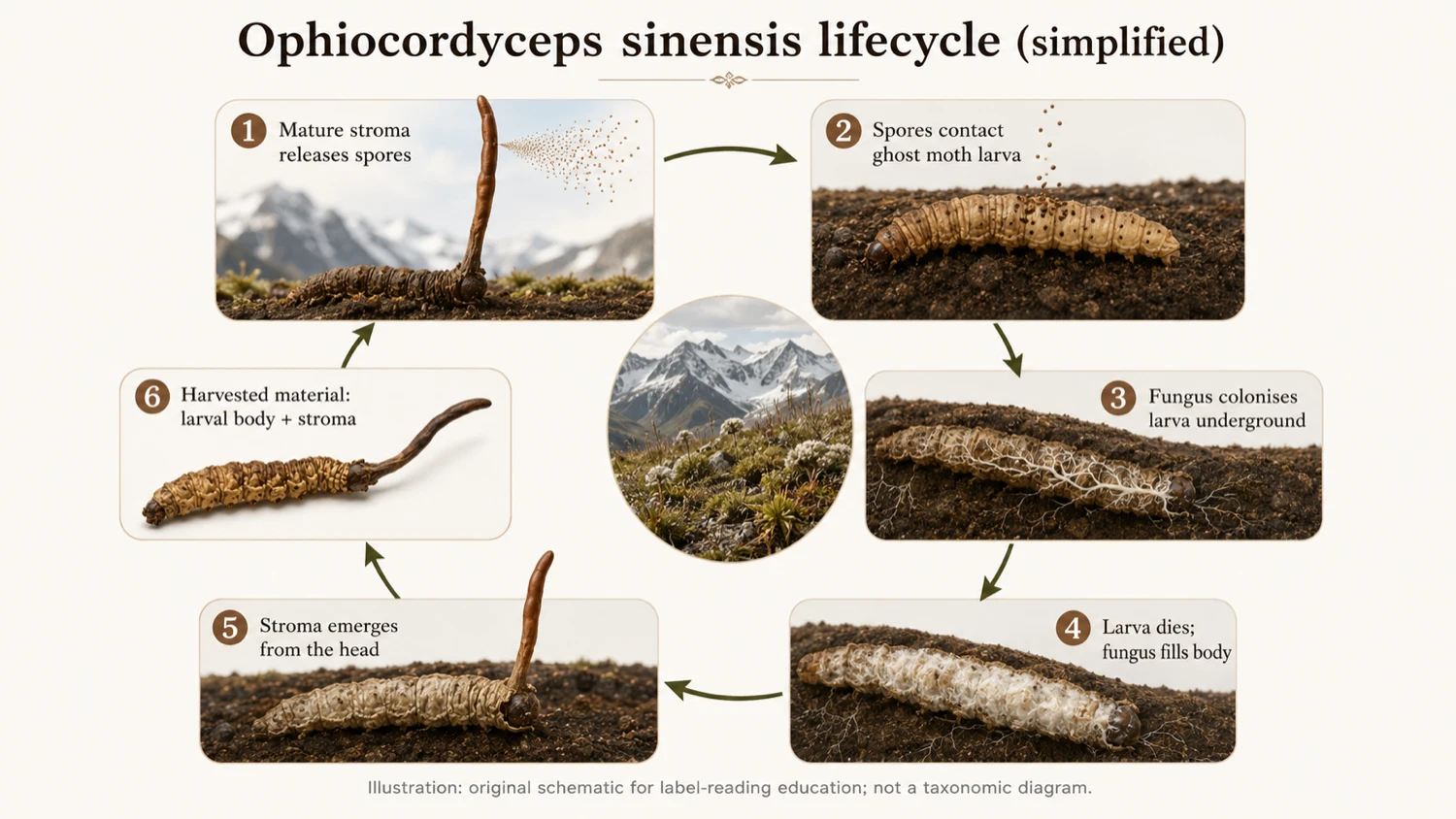
Figure 1. Simplified lifecycle of Ophiocordyceps sinensis. This original educational illustration shows the basic fungus-insect cycle; it is not a taxonomic diagram or a copied scientific figure.
3. What is actually inside wild Ophiocordyceps sinensis?
Because the harvested material includes both the insect body and the fungal tissue, its chemical profile is unusual compared with normal mushroom extracts. [3,4,15]
| Component group | Examples | Label-reading relevance |
|---|---|---|
| Primary nutrients | Proteins, lipids, amino acids, chitin; much of the physical material comes from the insect body. | Rarely shown on labels; important for understanding why this material is different from a normal mushroom extract. |
| Nucleosides | Adenosine; trace or low cordycepin. Usually low, often undetectable by standard HPLC; some studies detect small amounts. | Adenosine is a more realistic label marker for this material than high cordycepin. |
| Sugar alcohols | D-mannitol, historically called “cordycepic acid,” although it is not an acid. | A common traditional Cordyceps quality marker; used in some product specifications. |
| Polysaccharides | Fungal and insect-related polysaccharides. Not the same as beta-glucan; in processed products, readings may be influenced by carriers or substrates. | High polysaccharide claims need method clarification. |
| Sterols / fatty acids | Ergosterol-related compounds, fatty acids. | Not normally shown on supplement labels. |
| Minerals / trace elements | Possible arsenic elevation in wild material. | Safety testing matters; arsenic speciation matters. |
4. Why the industry moved from wild Cordyceps to fermented mycelium
The normal development path for many edible and medicinal mushrooms is familiar: a wild mushroom is identified, a strain is isolated, cultivation conditions are developed, and eventually the fruiting body can be produced at commercial scale. This happened with reishi, lion’s mane, shiitake, and many others.
Ophiocordyceps sinensis did not follow this simple path. Scientists could isolate Cordyceps-associated strains and grow mycelium, but producing the complete fungus-insect complex comparable to wild caterpillar fungus was much more difficult because the natural lifecycle depends on an insect host. Commercial development therefore stopped, in many cases, at the fermented mycelium stage, not by choice but by practical constraint.
From the second half of the 20th century, especially during the development of Chinese fermented Cordyceps pharmaceutical products, researchers isolated and cultivated multiple Cordyceps-associated strains. These became the basis for commercial ingredient supply. [5,8]
There is also a straightforward economic and resource argument. Wild caterpillar fungus can cost several thousand USD per kilogram at the wholesale level, and wild resources are under heavy conservation pressure. The extract industry needs tonnes of raw material; wild caterpillar fungus is not a realistic raw material base for ordinary supplement extracts. Fermented mycelium solved the volume and cost problem, but introduced new questions about species identity, labelling, and product transparency. [1,6]
5. The strain and naming problem
Not every Cordyceps-associated organism is the same, and not every commercial product clearly states which organism it contains. From my industry experience, this is often not because the final brand deliberately wants to mislead consumers. In many cases, the problem begins earlier, when brands or contract manufacturers do not receive clear and accurate information from suppliers or trading companies.
The table below maps the main labels, organisms, and concerns you are likely to encounter.
| Label / commercial term | More accurate identity | Typical market use | Label-reading concern |
|---|---|---|---|
| Ophiocordyceps sinensis / Cordyceps sinensis | True Chinese caterpillar fungus; insect-fungus complex from high-altitude soil. | Traditional high-value TCM material. In China it often functions more as a high-value gift or prestige material than a practical industrial extract raw material. | If a cheap extract claims to be this material, question the raw material source and price. |
| Hirsutella sinensis | Historically treated as a closely associated cultured form related to the O. sinensis lifecycle. [7,8] | Bailing-type fermented mycelium products. In China, Bailing capsule is a proprietary Chinese medicine based on mycelium powder, not an extract. Its approved uses include cough/asthma-related indications and adjunctive use in chronic renal insufficiency contexts. [7] | Not wild caterpillar fungus. Strain and product identity must be verified. Internal gene-level similarity observations should not be published as a percentage without a public citable source. |
| CS-4 / Paecilomyces hepiali / 蝙蝠蛾拟青霉 | In commercial supply-chain terms, CS-4 is Paecilomyces hepiali. Recent taxonomic discussions may place this organism under Samsoniella hepiali. That does not make it wild Ophiocordyceps sinensis. [8,9,10] | Jinshuibao-type products; international “Cordyceps sinensis mycelium” raw material. In China, Jinshuibao is also a proprietary Chinese medicine based on mycelium powder, not an extract. It is used in lung-kidney deficiency cough/asthma and chronic bronchitis-related contexts. [8,10] | Not wild O. sinensis. Often sold as “Cordyceps sinensis mycelium” without further disclosure. High cordycepin claims are inconsistent with this material and need explanation. |
| Samsoniella hepiali | Recent taxonomic reclassification discussion related to Paecilomyces hepiali. [8,9,10] | May appear in updated taxonomy or regulatory language. | Taxonomy update does not change the need for process disclosure and does not make it wild O. sinensis. |
| Cephalosporium sinensis | Cordyceps-associated fermented organism. [5,8] | Ningxinbao-type product, if verified. In China this is also a proprietary Chinese medicine based on mycelium powder rather than an extract, used in arrhythmia and atrioventricular block contexts. [5] | Product-specific identity required; do not assume the same composition as CS-4-type or wild material. |
| Mortierella hepiali | Cordyceps-associated fermented organism. [5,8] | Zhiling-type product, if verified. In China this is also a mycelium powder product, not an extract, used in kidney-deficiency-related cough and asthma contexts. [5,8] | Product-specific identity required. |
| Cordyceps militaris / 蛹虫草 | A different cultivated species; true fruiting body can be grown at commercial scale. | Main commercial natural source of meaningful cordycepin. | Compositionally attractive, but EU Novel Food issue in supplement applications. |
A note on market labelling: in China, some products use the word and image of “Cordyceps” (虫草) prominently on the front label and put “fermented Cordyceps mycelium powder” (发酵虫草菌粉) in small print on the back. This same kind of label ambiguity also appears in Western markets. Species transparency matters at both ends of the supply chain.
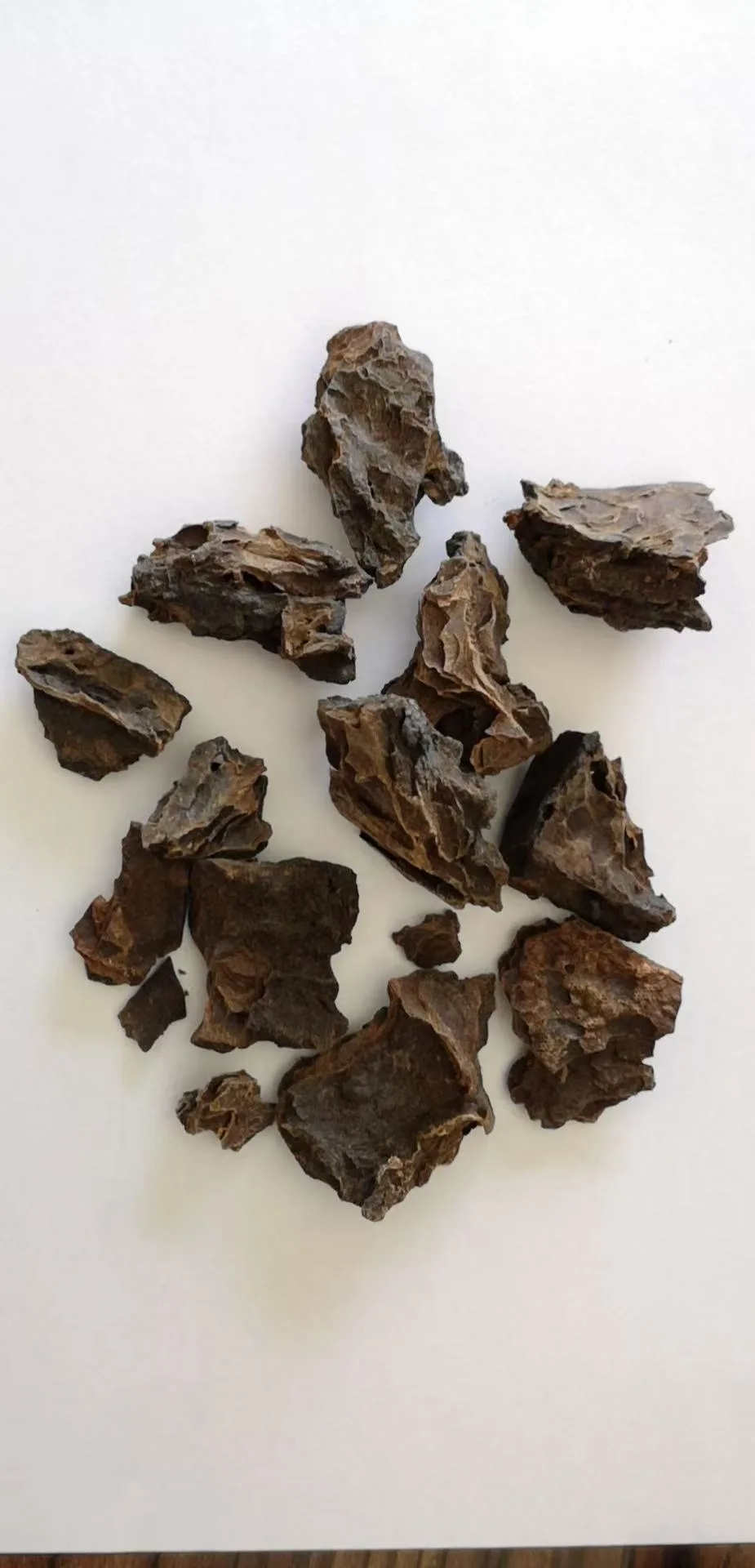
Figure 2. Liquid-fermented CS-4 / Paecilomyces hepiali mycelial biomass after separation. This biomass would be dried and milled into mycelium powder, or extracted with water to produce a Cordyceps-type mycelium extract. It looks and behaves very differently from wild Ophiocordyceps sinensis.
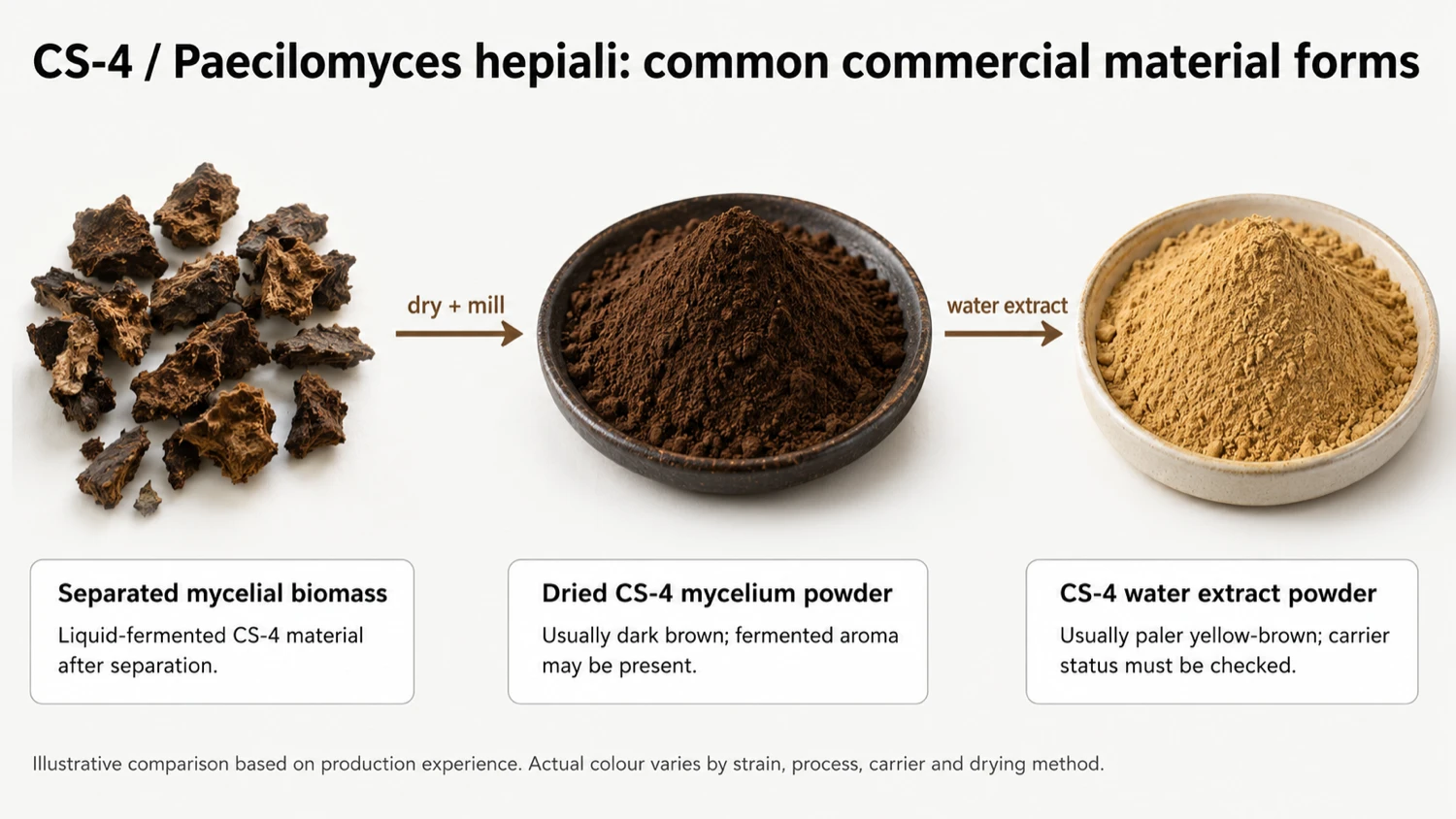
Figure 3. CS-4 / Paecilomyces hepiali material forms: separated mycelial biomass, mycelium powder, and water extract powder. This is an illustrative comparison based on production experience; actual colour varies by strain, process, carrier and drying method.
6. Fermentation method: solid-state, liquid, and semi-solid
The fermentation process determines the composition of the final material, the level of substrate residue, and what analytical markers are realistic to expect. The important distinction is whether the fungal biomass is separated from the culture medium or whether the whole colonised substrate becomes part of the final powder.
| Process | What it means | Cost / scalability | Label-reading risk |
|---|---|---|---|
| Solid-state fermentation | Fungus grows through grain, legume, or other solid substrate. The entire mass may be dried and milled. Final product may be described as myceliated substrate, fermented biomass, or mycelium-substrate complex. | Low cost; highly scalable. | Final powder may contain starch, alpha-glucans, grain proteins, and substrate material alongside fungal biomass. Polysaccharide numbers may reflect substrate rather than fungal beta-glucan. |
| Liquid submerged fermentation | Fungus grows in liquid or slurry medium. Biomass is filtered, pressed, or centrifuged after fermentation. Cleaner fungal composition than solid substrate. | Higher cost and lower yield per batch. | Needs strain, culture medium, and separation process disclosure to be fully meaningful. |
| Semi-solid fermentation | A practical compromise between liquid and solid-state fermentation, using a thicker or mixed medium. Residual culture medium may remain. | Moderate cost; commercially meaningful in some settings. | May still leave enough medium residue to influence carbohydrate or polysaccharide readings. |
Typical fermentation medium components may include glucose, peptone, yeast extract, potato-based media, soybean meal, corn steep liquor, mineral salts, and other carbon and nitrogen sources depending on the organism and production objective. [11]
7. Polysaccharides, beta-glucans, adenosine, mannitol, and what they mean
The polysaccharide measurement problem
In China, many polysaccharide specifications are still based on the phenol-sulfuric acid colorimetric method. This method does not identify a specific fungal polysaccharide. In simple terms, strong acid hydrolyses carbohydrate materials into smaller sugar units, and phenol-sulfuric colour development is then used to estimate total carbohydrate content. This means the result can respond to many carbohydrate sources, not only mushroom-derived polysaccharides. Starch, dextrin, maltodextrin, culture medium residues, and even some insoluble plant or fungal carbohydrate materials can contribute to the reading after acid hydrolysis.
A high polysaccharide number measured this way does not automatically mean high fungal beta-glucan or meaningful Cordyceps activity. Total polysaccharides are not the same as beta-glucans. [12]
Beta-glucans and why the method matters
Mycelium does contain fungal beta-glucans; beta-glucans are a real component of fungal cell walls. The problem is that many commercial mycelium-substrate products also contain starch, alpha-glucans, grain polysaccharides, culture medium residues, and carriers that can inflate total polysaccharide results. [13]
Enzymatic methods such as the Megazyme-type assay are much more specific than broad colorimetric polysaccharide tests because they can distinguish alpha-glucans such as starch or maltodextrin from true beta-glucans. But even a beta-glucan result does not tell the full product story. It does not reveal whether the beta-glucan comes from fruiting body powder, fermented mycelium, an insoluble structural fraction, or another beta-glucan-containing material. I will discuss this method-level limitation more fully in a separate article on mushroom testing. [14]
Solubility also matters for extract products. If most of the measured beta-glucan is insoluble, the product may contain added mushroom powder or a less fully processed structural fraction rather than a clean soluble extract.
From my own testing experience, some Cordyceps-type mycelium powders may show around 7 to 11% beta-glucan by enzymatic assay. This is a useful data point, but it should not be confused with a high-quality soluble extract specification.
Adenosine and D-mannitol: more honest markers for CS-4-type products
D-mannitol was historically called “cordycepic acid” in older literature, although it is not actually an acid. Together with adenosine and polysaccharides, it has historically been among the more realistic analytical markers for CS-4 / Paecilomyces hepiali-type products. A product specification that honestly uses polysaccharides, adenosine, and D-mannitol is often more appropriate for this material than one that forces a high cordycepin claim. [3,15]
8. Cordycepin and Cordyceps militaris: the real commercial source
Cordycepin is 3’-deoxyadenosine, a nucleoside analogue. It has been studied in cell and animal models for a range of biological activities including anti-inflammatory, immune, neurological, and other mechanisms. These are pharmacological research areas, not supplement claims. Human research is more limited. [16]
Species and expected cordycepin: a practical comparison
| Material | Expected cordycepin pattern | Label implication |
|---|---|---|
| Wild Ophiocordyceps sinensis | Usually low, trace, or often undetectable by standard HPLC. Some studies detect small amounts. Not characterised as a high-cordycepin material. | High cordycepin claims need strong evidence and analytical method disclosure. |
| CS-4 / Paecilomyces hepiali-type fermented mycelium | Usually low or trace. Not a high-cordycepin material. | High cordycepin claims are inconsistent with this material and require explanation. |
| Hirsutella sinensis-type fermented mycelium | Based on my own HPLC testing experience, submerged fermented Hirsutella sinensis-type mycelium samples have shown cordycepin around 0.1%. This is not a universal specification and requires batch-specific testing. It is still not a high-cordycepin ingredient compared with Cordyceps militaris. | Low but detectable cordycepin may exist in some batches, but this material should not be positioned as a high-cordycepin product. Batch-specific HPLC is needed. |
| Cordyceps militaris fruiting body or extract | Can be meaningfully higher. Strongly strain- and batch-dependent. HPLC confirmation per batch is needed. | Honest commercial natural source of meaningful cordycepin, but EU Novel Food issue in supplement applications. |
| Isolated or synthetic cordycepin | Can be produced or supplied as high-purity cordycepin, commonly around 98% purity in some supply situations. It is not a Cordyceps material by itself. A small addition can strongly raise the final cordycepin percentage in a blended powder. | The HPLC cordycepin number may be real, but the source story is different. If used to support a natural Cordyceps extract claim, it must be clearly disclosed; otherwise the label can mislead consumers. |
[3,16,17,21,22]
Liquid versus solid fermentation and the cordycepin measurement effect
If cordycepin is present in the fungal biomass, a well-separated liquid-fermented biomass may show a cleaner marker profile than a solid-state biomass diluted by substrate. In solid-state or semi-solid products, the measured cordycepin percentage can appear lower simply because non-fungal substrate material remains part of the dried mass.
Cordycepin as a secondary metabolite
Cordycepin is a secondary metabolite. Its level in Cordyceps militaris depends on strain selection, cultivation time, maturity stage, substrate composition, nitrogen source, carbon-to-nitrogen ratio, temperature, light conditions, harvest timing, and drying and extraction method. Nitrogen-rich materials such as soybean meal, silkworm pupae, peptone, corn steep liquor, yeast extract, or other organic nitrogen sources may influence cordycepin production. Soybean is not the only option; the specific nitrogen balance matters more than the source alone. [18,19]
Grower observation: morphology and cordycepin potential
In cultivation areas, growers sometimes say the “uglier” Cordyceps militaris is more expensive. What they usually mean is not aesthetic value but morphology: fruiting bodies with larger, more developed club-like heads are often believed to have stronger cordycepin potential. This is practical field experience, not a replacement for HPLC testing. But it reminds us that cordycepin is linked to strain, maturity, morphology, and cultivation conditions, not just a species name.
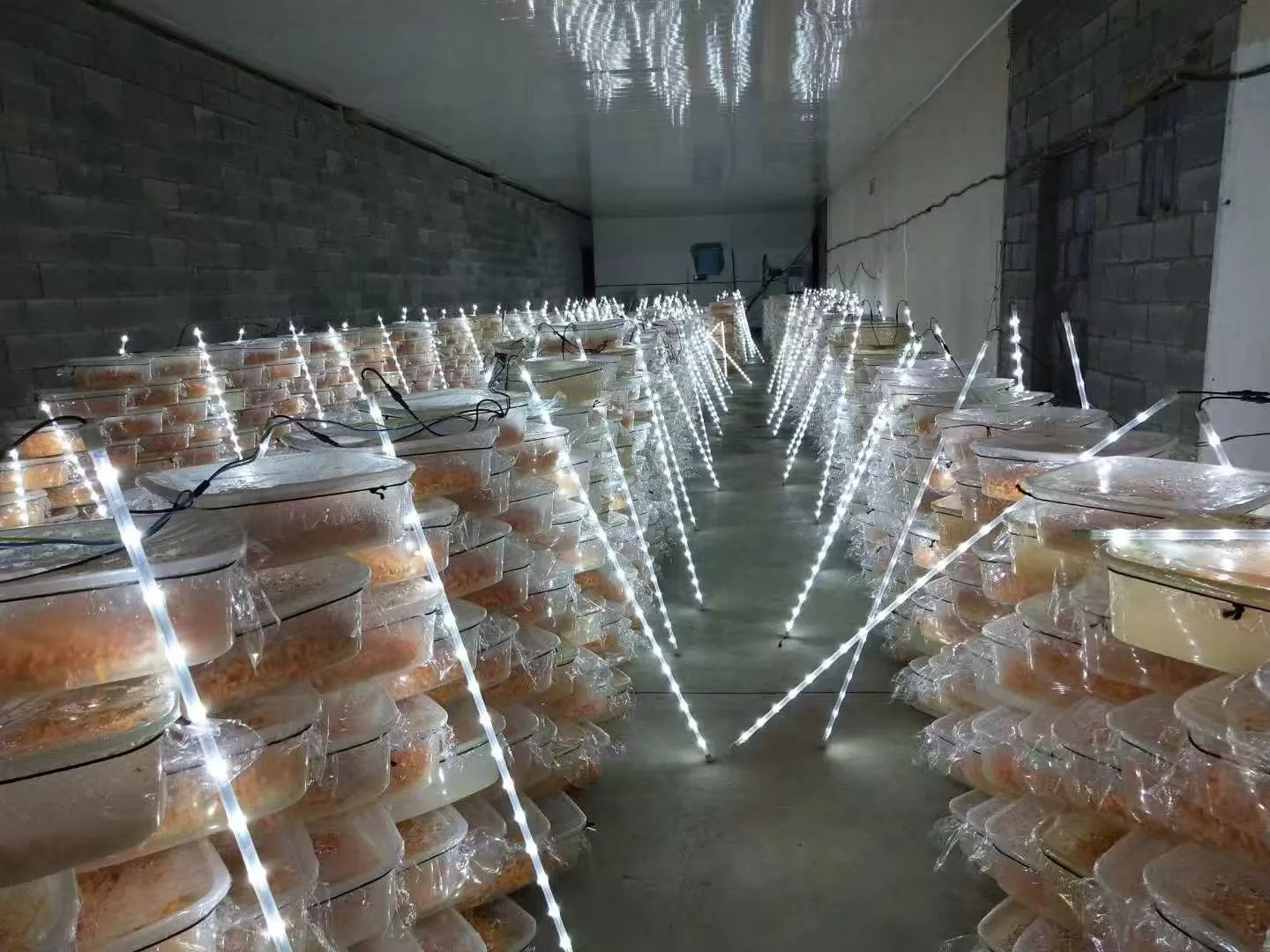
Figure 4. Controlled cultivation of Cordyceps militaris fruiting bodies. Strain, substrate, lighting, and temperature all influence cordycepin production.
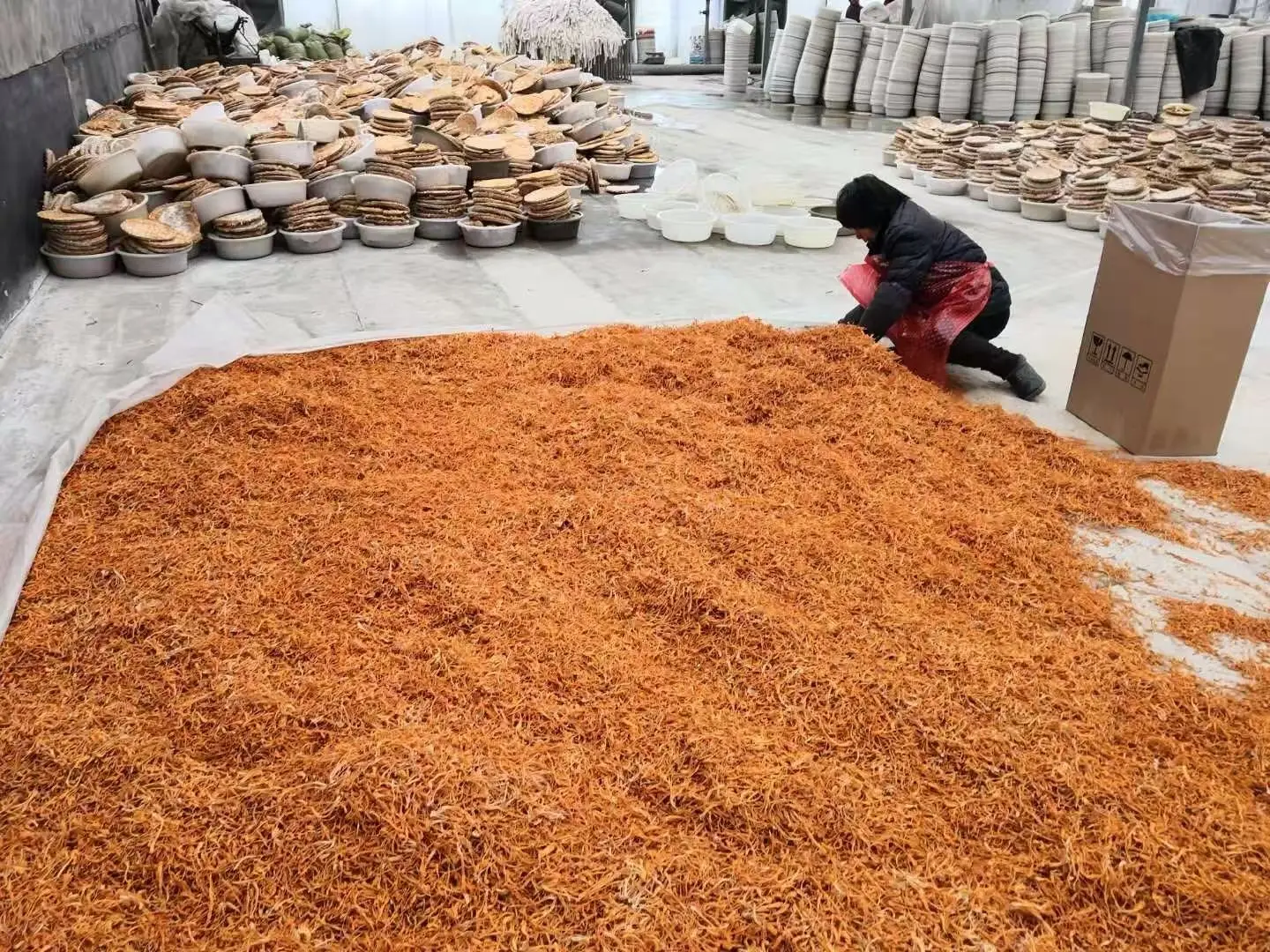
Figure 5. Cordyceps militaris fruiting bodies being dried after harvest. The orange-yellow colour is a practical visual clue that distinguishes this material from dark fermented mycelium products.
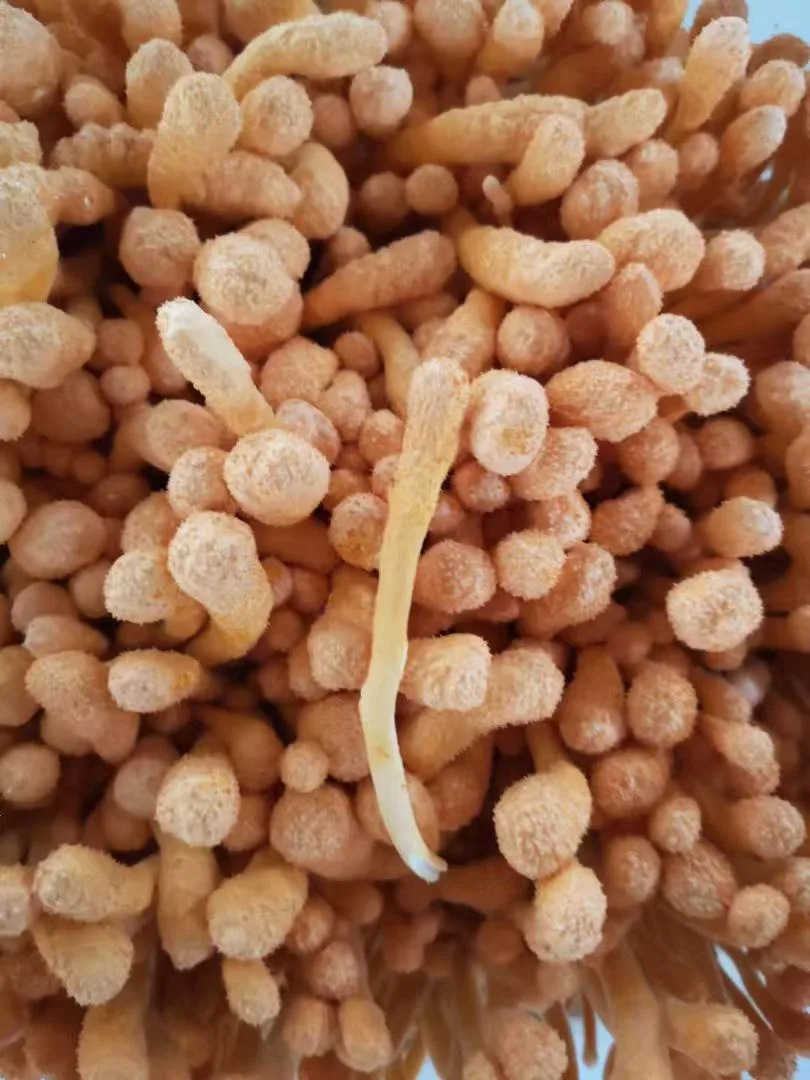
Figure 6. Cordyceps militaris fruiting bodies with developed club-like heads. Experienced growers often associate this morphology with stronger cordycepin potential, but batch-specific HPLC testing is still required.
9. Processing, extraction, purification, and synthetic cordycepin
Extraction
Cordycepin is a nucleoside-type compound and is water-soluble. In practical manufacturing, water extraction is often preferred: it is cheaper than ethanol, easier to justify for a water-soluble marker compound, and broadly acceptable for food-grade processing. Cordycepin may also be extractable in aqueous alcohol systems, but water is usually the commercial default. [19]
From production experience, measured cordycepin can begin to decline when liquid extract is held above around 60°C, especially when heat exposure is prolonged during extraction or concentration steps. For this reason, some manufacturers prefer low-temperature water extraction and gentle concentration for cordycepin-rich Cordyceps militaris extracts. This should be understood as a process-control observation, not a claim that cordycepin instantly disappears above 60°C. The exact relationship between temperature, duration, and cordycepin stability should be confirmed by controlled testing. [19]
Higher-purity extracts and purification
Beyond basic extraction, higher-purity cordycepin preparations may involve concentration, column chromatography, or other purification approaches. These produce materials ranging from a basic dried extract to highly purified fractions with a defined cordycepin content. [20]
Isolated and synthetic cordycepin
High-purity isolated or synthetic cordycepin is typically a white crystalline powder and may be available at around 98% purity. Based on my supply-chain experience, this material may cost around USD 5,000 to 6,000 per kilogram in some supply situations, although price can change with purity, source, order volume, and market demand. [21,22]
This price looks expensive at first, but the calculation changes when the goal is only to raise the cordycepin number in a finished powder. To make 1 kg of finished material claim 1% cordycepin, the product needs 10 g of actual cordycepin. If the added cordycepin is 98% pure, about 10.2 g is needed. At USD 5,000 to 6,000 per kg for 98% cordycepin, that addition costs roughly USD 51 to 61 per kg of finished material. Even a 5% cordycepin claim would require about 51 g of 98% cordycepin per kg of finished powder, adding roughly USD 255 to 306 per kg before blending and processing costs.
This can be much cheaper than producing a genuine Cordyceps militaris extract that naturally contains 1% cordycepin, once raw material selection, low-temperature extraction, concentration, drying yield, batch variability, and testing cost are considered. This economic gap helps explain why isolated or synthetic cordycepin can be tempting in the market.
The issue is not that HPLC sees a different molecule. If the molecule is chemically identical, cordycepin is cordycepin at the molecular level. The issue is product truth: a Cordyceps militaris extract naturally containing cordycepin is not the same commercial or ethical story as a CS-4 mycelium powder or generic Cordyceps extract fortified with synthetic cordycepin. If the label implies a natural Cordyceps extract, but the cordycepin number is achieved mainly by added isolated or synthetic cordycepin, the label is not giving the consumer the full picture.
If visible white particles appear in a Cordyceps powder or capsule, that may be a warning sign and should prompt questions about isolated or synthetic cordycepin or other added materials. But the absence of visible white particles does not prove that no isolated compound was added; fine blending can hide visual differences.
This cost logic creates a strong commercial incentive, but it also creates a transparency problem. Source transparency, regulatory classification, label accuracy, impurity profile, dosage, and consumer expectation all matter. A product that implies it is a natural Cordyceps extract should not rely on synthetic or isolated cordycepin to achieve its label claim unless that addition is clearly disclosed.
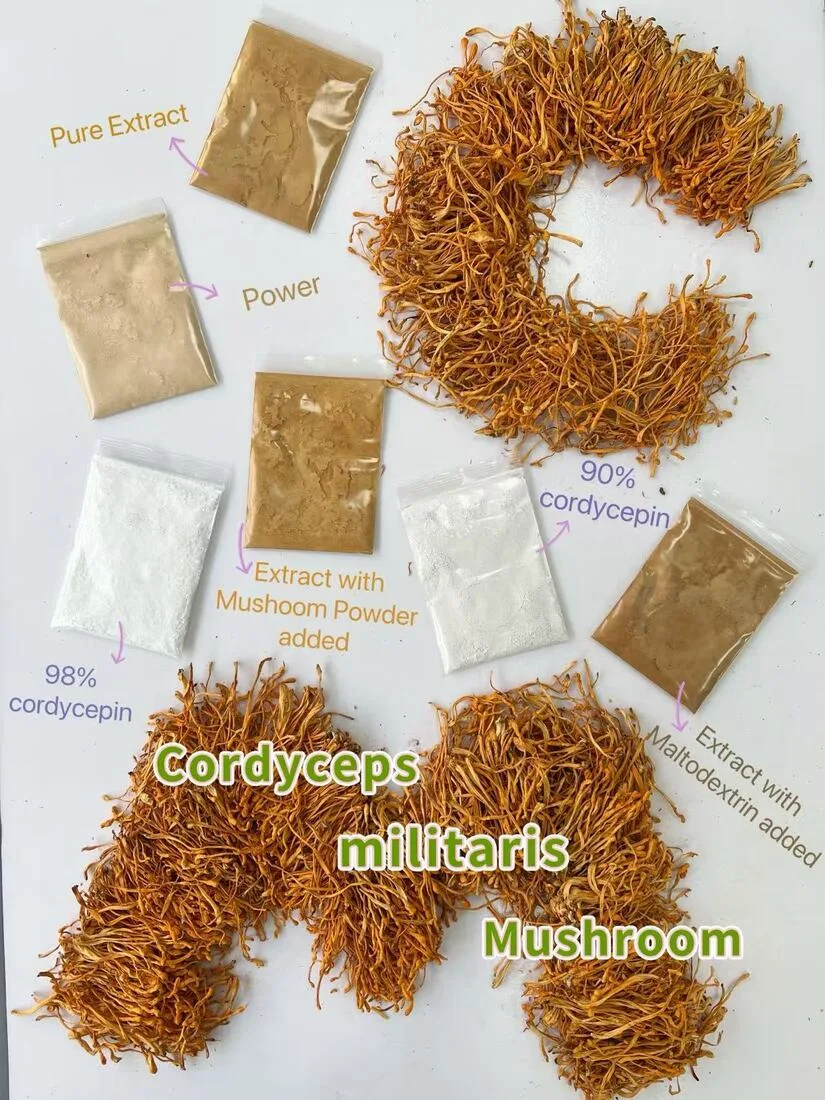
Figure 7. Example appearance comparison: high-purity cordycepin isolate, Cordyceps militaris extracts, carrier-containing extract, and dried Cordyceps militaris fruiting bodies. The same cordycepin label claim may correspond to very different materials.
10. EU Novel Food and why some labels become strange
EU Novel Food Regulation (EU) 2015/2283 defines a novel food as any food not significantly consumed in the EU before 15 May 1997. Products meeting that definition require authorisation before they can be placed on the EU market as food or food supplement ingredients. [23]
Ophiocordyceps sinensis and Cordyceps sinensis-type products have a longer documented history in European food supplement markets and appear to have a different regulatory pathway for supplement applications. Cordyceps militaris, by contrast, is generally considered an unauthorised Novel Food in EU food supplement contexts, because the evidence for its significant pre-1997 consumption in the EU is not established in the same way. [23,24,25]
The Novel Food problem does not make Cordyceps militaris a bad material. It makes it a difficult material to label and sell legally in Europe.
This situation is not unique to Cordyceps. Turkey Tail, also known as Coriolus versicolor or Trametes versicolor, faces a similar Novel Food issue in the EU. Like Cordyceps militaris, the problem is not that the mushroom is necessarily unsafe or biologically uninteresting. The problem is that it does not have the same accepted pre-1997 food-use history or an authorised route for EU food supplement applications. This is why several functional mushrooms well known in Asian traditional use can still become difficult ingredients in the European supplement market. [24,26]
One more point worth adding: even when a Cordyceps sinensis ingredient has a non-novel pathway in food supplements, this does not automatically mean free use in all food categories. Drinks, coffee blends, chocolates, and gummies are different food categories, and the non-novel status for supplements does not automatically transfer. Category-specific regulatory advice is needed.
The Novel Food issue creates a real commercial tension. Some products want the cordycepin story of Cordyceps militaris while relying on the regulatory familiarity of the Cordyceps sinensis name. This may explain why some labels say Cordyceps or Cordyceps sinensis while the powder colour, cordycepin level, or COA pattern suggests Cordyceps militaris or added isolated cordycepin. Commercially understandable does not mean transparent or defensible.
11. What can European consumers and brands actually choose?
Most European Cordyceps products fall into one of three practical situations:
A. The legally safer route: Cordyceps sinensis-type fermented mycelium
Usually CS-4 / Paecilomyces hepiali-type material, either as mycelium powder or water extract.
- More realistic under current European supplement practice.
- Scalable and affordable.
- Suitable for polysaccharides, adenosine, D-mannitol-type markers.
- Commercially reasonable when identity and process are properly disclosed.
- Limitations: not wild Ophiocordyceps sinensis; not normally high in cordycepin; solid-state products may contain substrate residues; extract products may contain carriers; clinical evidence from wild Cordyceps or Cordyceps militaris cannot be automatically transferred.
B. The compositionally attractive but legally more complex route: Cordyceps militaris
Cordyceps militaris is the honest commercial natural source of meaningful cordycepin.
- Orange / yellow-orange powder or extract; easier to recognise visually.
- Can contain meaningful cordycepin from cultivation; also contains fungal beta-glucans from the fruiting body.
- Limitations: Novel Food risk in EU supplement applications; brands must verify their regulatory route; species must be declared honestly; if labelled as Cordyceps sinensis, a species mismatch occurs.
In some cases, this may not begin as a deliberate attempt to mislead. A brand may want to offer the more compositionally attractive Cordyceps militaris material while also facing a difficult EU Novel Food route. From a commercial point of view, this creates pressure for compromise. But a compromise that hides the species identity still creates a long-term transparency problem.
C. The market grey zone
Label says Cordyceps or Cordyceps sinensis, but the powder colour, cordycepin level, or COA pattern suggests Cordyceps militaris, blending, or added isolated cordycepin.
Many brands may not knowingly intend to mislead consumers. In many cases, the confusion begins upstream, with suppliers, trading companies, incomplete COAs, ambiguous ingredient names, or regulatory pressure. But once a product reaches the consumer, the brand still has responsibility to verify what it is selling.
Practical guidance for consumers, brands, and buyers
- For consumers: if you choose a Cordyceps sinensis / CS-4-type product, understand it is usually a fermented mycelium product, not wild caterpillar fungus and not a high-cordycepin material.
- For consumers: if you choose a Cordyceps militaris product, check whether the species is clearly declared and whether the product has a defensible regulatory route in your market.
- For consumers: if a label says Cordyceps sinensis but claims high cordycepin, this is not automatically fake, but it is a mismatch that needs explanation.
- For brands: do not only rely on a COA. Check powder colour, smell, solubility, analytical method, species identity, process type, and legal status together.
- For brands: if a supplier COA says “fruiting body” but the price, colour, smell, and process suggest CS-4 fermented mycelium, do not accept it without verification.
This last point is important. A supplier COA may say “Cordyceps sinensis” and list the part used as “fruiting body.” For a Western contract manufacturer or brand, this wording can easily create the impression that the material is true wild Chinese caterpillar fungus. In my view, this kind of wording usually comes from a trader or middleman rather than a real producer, because a serious producer should know whether the material is wild caterpillar fungus, Cordyceps militaris fruiting body, CS-4 / Paecilomyces hepiali mycelium, or an extract made from one of these. This is often where inaccurate product identity begins: not on the finished brand label, but upstream on the supplier COA.
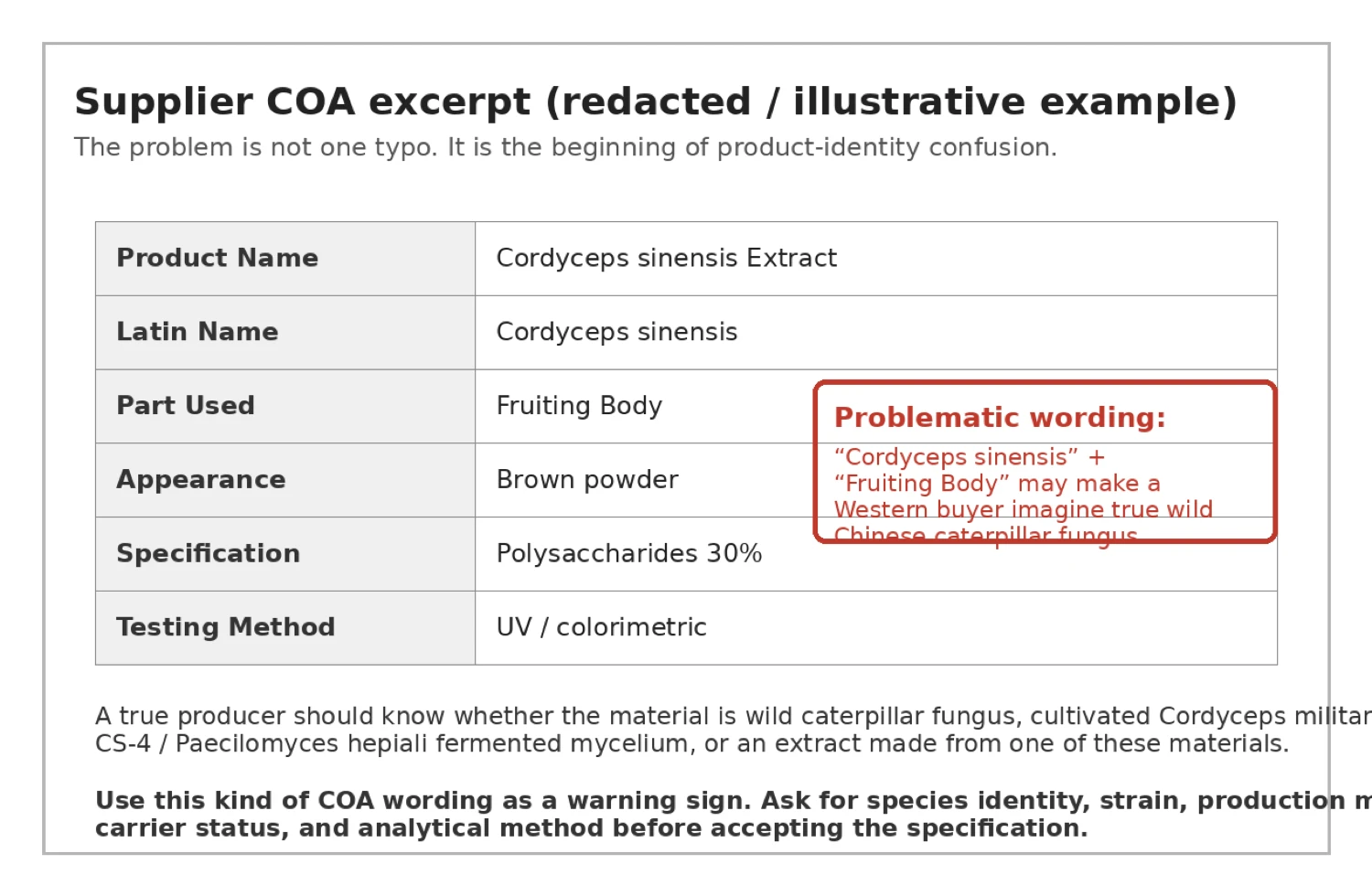
Figure 8. Redacted COA-style example based on supplier wording. “Cordyceps sinensis” plus “Fruiting Body” can mislead a buyer if the material is actually fermented mycelium or another Cordyceps-related ingredient. Ask for species identity, strain, production method, carrier status and analytical method.
- For the industry: the long-term solution is clearer species identity, better supply-chain documentation, and a more realistic regulatory pathway, not hiding Cordyceps militaris under Cordyceps sinensis language.
12. Practical visual and sensory clues
These clues are not laboratory proof. They help the reader ask better questions before accepting a COA at face value.
| Observation | Possible meaning | What to verify |
|---|---|---|
| Orange / yellow-orange powder | Possible Cordyceps militaris fruiting body powder or extract. Natural pigments from the fruiting body. | Verify species declaration, Novel Food status, and HPLC cordycepin per batch. |
| Dark brown, fermented, soy-sauce-like smell | Possible CS-4 / Paecilomyces hepiali-type fermented mycelium or myceliated substrate. | Verify fermentation method, substrate type, and whether starch-corrected beta-glucan is provided. |
| Pale yellow, soluble extract | Possible mycelium water extract or carrier-containing spray-dried extract. | Verify carrier content; check extract ratio claims; review COA for starch and maltodextrin. |
| Very sweet taste, highly water-soluble | Possible maltodextrin, polydextrose, sugars, or other carrier contribution. | Ask for full formulation disclosure; verify whether carrier is declared on label. |
| Visible white particles | Possible isolated compound, poor blending, or added material. | Request full formula and HPLC profile; ask whether isolated cordycepin was used. |
| High cordycepin on a Cordyceps sinensis label | Species-marker mismatch requiring explanation. | Verify actual species by DNA testing; confirm analytical method is HPLC or UPLC; request supplier declaration on cordycepin source. |
13. Wild Cordyceps and heavy metal considerations
Wild Ophiocordyceps sinensis has been reported to accumulate arsenic at elevated levels in some analytical studies. The health relevance depends on arsenic speciation (inorganic arsenic is the more regulated and more toxic form) as well as total dose and the regulatory limits applied in the relevant market. Total arsenic figures without speciation data may not adequately reflect actual exposure risk. [4]
This is not a reason to treat wild Cordyceps as inherently unsafe, but it is a reason to require arsenic speciation data alongside total heavy metal testing for wild or wild-sourced materials, rather than accepting only total metal limits. For fermented mycelium products, standard contamination testing on substrate ingredients and finished product remains good practice, though the arsenic accumulation concern is less characteristic of fermentation-based materials.
14. Clinical evidence: product identity comes first
Cordyceps has a long history of traditional use in Chinese medicine and Tibetan traditional practice as a tonic associated with fatigue, kidney health, and general vitality. That tradition is real and historically significant. It is not, by itself, clinical evidence for modern fermented mycelium capsules made from a different organism by a different process.
Before asking whether Cordyceps works, ask which Cordyceps.
Human clinical research on Cordyceps-related preparations has been conducted in areas including fatigue, exercise capacity, renal function in certain patient populations, and immune markers. The evidence is not uniform; study populations, designs, doses, and product identities vary considerably. Many studies have used specific Chinese pharmaceutical-grade fermented mycelium products, including CS-4-type preparations that are regulated pharmaceutical products in China, such as Jinshuibao, rather than the commercial supplement ingredients most consumers purchase. [27,28,29]
Research on Cordyceps militaris and on isolated cordycepin in cell and animal models has produced preliminary findings in several biological areas including anti-inflammatory, immune, neurological, circadian rhythm, and cancer-related mechanisms. These are pharmacological research areas. Human research specifically on Cordyceps militaris supplement products is more limited. [16,17,29]
Findings from a regulated CS-4 pharmaceutical preparation cannot automatically be transferred to a generic Cordyceps sinensis mycelium capsule bought online. Findings from isolated cordycepin cell studies cannot automatically be transferred to a Cordyceps extract product.
Clinical evidence depends on product identity. Before asking whether Cordyceps works, ask: which Cordyceps? Which species? Which process? Which dose? Studied in which population?
Conclusion
For European consumers, the honest choice is often between a legally safer Cordyceps sinensis-type fermented mycelium product and a compositionally more attractive Cordyceps militaris product with regulatory complexity. Neither is automatically better. The right choice depends on purpose, dose, honest labelling, and the current regulatory situation in your market.
For brands, the responsibility is not only to obtain a COA. It is to verify whether the COA, the powder, the species declaration, the process, and the label language are all telling the same story.
For the industry, the long-term answer is not to hide Cordyceps militaris behind Cordyceps sinensis language. It is to build a clearer regulatory and product-identity pathway for the market, one that allows honest species disclosure without creating automatic regulatory exposure.
The best Cordyceps product is not the one with the highest number. It is the one where the species, process, marker compounds, COA, powder appearance, and legal status all tell the same story.
For educational purposes only. This article does not constitute medical advice or a recommendation to diagnose, treat, or prevent any disease. Redacted images are used only to illustrate label-reading and sourcing questions, not to identify or criticise any specific brand.
References / Further Reading
- He Z. et al. (2025). The Conservation Crisis of Ophiocordyceps sinensis. Fungal Biology Reviews / PMC. URL: https://pmc.ncbi.nlm.nih.gov/articles/PMC12734330/
Show all 29 references
- Liu G., Han R., Cao L. (2019). Artificial Cultivation of the Chinese Cordyceps From Injected Ghost Moth Larvae. Environmental Entomology, 48(5), 1088-1094. URL: https://academic.oup.com/ee/article/48/5/1088/5566646
- Hu H. et al. (2015). Identification of chemical markers in Cordyceps sinensis by HPLC-MS/MS. PLoS ONE. URL: https://pmc.ncbi.nlm.nih.gov/articles/PMC4596796/
- Xiao Y. et al. (2021). Arsenic Content, Speciation, and Distribution in Wild Cordyceps sinensis. Journal of Agricultural and Food Chemistry / PMC. URL: https://pmc.ncbi.nlm.nih.gov/articles/PMC7910042/
- Dong C.H. & Yao Y.J. (2015). Cordyceps industry in China. Mycology. URL: https://www.tandfonline.com/doi/full/10.1080/21501203.2015.1043967
- Wang W. et al. (2017). Investigation on natural resources and species conservation of Ophiocordyceps sinensis. Scientific Reports / PMC. URL: https://pmc.ncbi.nlm.nih.gov/articles/PMC6053348/
- Shu X. et al. (2024). Efficacy and safety of Cordyceps sinensis (Hirsutella sinensis, Cs-C-Q80) Bailing capsule. Frontiers / PMC. URL: https://pmc.ncbi.nlm.nih.gov/articles/PMC11347402/
- Liu W. et al. (2022). Mechanism of Cordyceps sinensis and its Extracts in the Treatment of Diabetic Kidney Disease: A Review. Frontiers in Pharmacology. URL: https://www.frontiersin.org/journals/pharmacology/articles/10.3389/fphar.2022.881835/full
- Mongkolsamrit S. et al. (2020). Samsoniella and related clavicipitaceous fungi. Fungal Diversity. URL: https://link.springer.com/article/10.1007/s13225-020-00457-3
- Dai R.Q. et al. (2018). Response to neotypification of Paecilomyces hepiali. Taxon. URL: https://onlinelibrary.wiley.com/doi/pdf/10.12705/674.7
- Chellapandi P. et al. (2024). Ophiocordyceps sinensis: A Potential Caterpillar Fungus for Bioactive Compounds. Exploratory Research and Hypothesis in Medicine. URL: https://www.xiahepublishing.com/2472-0712/ERHM-2023-00040
- Masuko T. et al. (2005). Carbohydrate analysis by a phenol-sulfuric acid method in microplate format. Analytical Biochemistry. URL: https://pmc.ncbi.nlm.nih.gov/articles/PMC9378961/
- Ruiz-Herrera J. & Ortiz-Castellanos L. (2019). Cell wall glucans of fungi. A review. The Cell Surface. URL: https://pmc.ncbi.nlm.nih.gov/articles/PMC7389562/
- Megazyme / Neogen. beta-Glucan Assay Kit (Yeast and Mushroom), K-YBGL. URL: https://www.megazyme.com/beta-glucan-assay-kit-yeast-mushroom and protocol PDF: https://prod-docs.megazyme.com/documents/Assay_Protocol/K-YBGL_DATA.pdf
- Xie J.W. et al. (2010). Analysis of the Main Nucleosides in Cordyceps Sinensis by LC/ESI-MS. Molecules / PMC. URL: https://pmc.ncbi.nlm.nih.gov/articles/PMC6257052/
- Ashraf S.A. et al. (2020). Cordycepin for Health and Wellbeing: A Potent Bioactive Metabolite of an Entomopathogenic Medicinal Fungus. Molecules / PMC. URL: https://pmc.ncbi.nlm.nih.gov/articles/PMC7356751/
- Phull A.R. et al. (2022). Cordyceps militaris as a Bio Functional Food Source. Foods / PMC. URL: https://pmc.ncbi.nlm.nih.gov/articles/PMC8875674/
- Xia Y. et al. (2017). Fungal Cordycepin Biosynthesis Is Coupled with the Production of the Safeguard Molecule Pentostatin. Cell Chemical Biology. URL: https://www.cell.com/cell-chemical-biology/fulltext/S2451-9456(17)30327-6
- Wang H.J. et al. (2014). Optimization of Ultrasonic-Assisted Extraction of Cordycepin from Cordyceps militaris. Molecules / PMC. URL: https://pmc.ncbi.nlm.nih.gov/articles/PMC6271585/
- Quan N.V. et al. (2022). Simple Isolation of Cordycepin from Cordyceps militaris by Column Chromatography. Separations. URL: https://www.mdpi.com/2297-8739/9/10/290
- Yang L. et al. (2020). Synthesis of cordycepin: Current scenario and future perspectives. Synthetic and Systems Biotechnology. URL: https://pubmed.ncbi.nlm.nih.gov/32610064/
- Sigma-Aldrich. Cordycepin, from Cordyceps militaris, greater than or equal to 98% (HPLC), powder. URL: https://www.sigmaaldrich.com/US/en/substance/cordycepin2512473030
- European Commission. Novel Food. URL: https://food.ec.europa.eu/food-safety/novel-food_en
- RASFF Window. Notification 2022.4226: Unauthorised novel food ingredient Cordyceps militaris in food supplement. URL: https://webgate.ec.europa.eu/rasff-window/screen/notification/559027
- ROSA Pharma. (2025). Novel Food Europe Updates: Summary from February 2025. URL: https://rosapharma.pt/novel-food-europe-updates-summary-from-february-2025/
- RASFF Window. Notification 2026.1022: Several unauthorised novel food ingredients including turkey tail and Cordyceps militaris. URL: https://webgate.ec.europa.eu/rasff-window/screen/notification/821402
- Orr et al. (2014). Cordyceps sinensis for treating chronic kidney disease. Cochrane Database of Systematic Reviews. URL: https://pubmed.ncbi.nlm.nih.gov/25519252/
- Chen S. et al. (2010). Effect of Cs-4 (Cordyceps sinensis) on Exercise Performance in Healthy Older Subjects. Journal of Alternative and Complementary Medicine / PMC. URL: https://pmc.ncbi.nlm.nih.gov/articles/PMC3110835/
- Memorial Sloan Kettering Cancer Center. Cordyceps. URL: https://www.mskcc.org/cancer-care/integrative-medicine/herbs/cordyceps