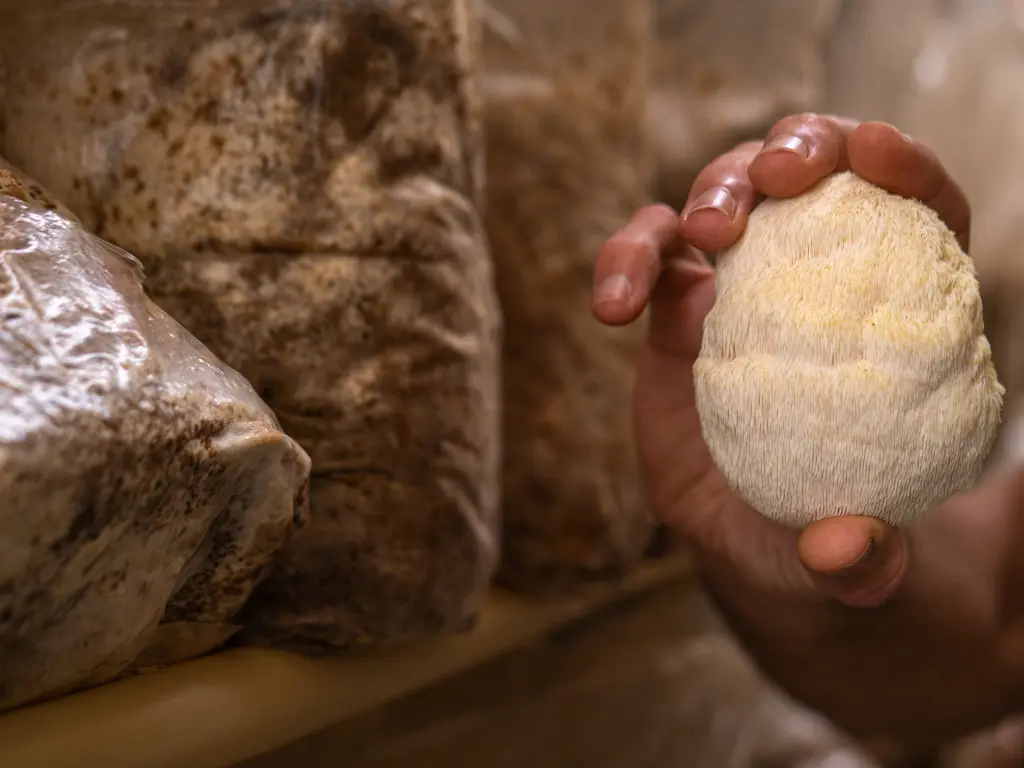
Lion’s Mane for Mood, Cognition and Healthy Ageing
What Practitioners Should Know About β-glucans, Hericenones, Erinacines & Extraction Methods
Introduction
Mood disturbances, sleep disruption and cognitive decline are increasingly common clinical presentations, particularly among peri-menopausal women, chronically stressed adults and ageing populations.¹ In this context, Hericium erinaceus (Lion’s Mane) has attracted growing scientific interest due to its multi-pathway potential, including support of neurotrophic signalling, immune modulation, attenuation of neuroinflammation and interaction with the gut–brain axis.²
Although human trials remain limited in scale, available findings—when interpreted alongside mechanistic and preclinical research—suggest that Lion’s Mane may offer meaningful support for mood regulation, cognitive function and neuroplasticity. For practitioners, however, the key question is not simply whether Lion’s Mane works, but in which form, through which mechanisms, and for which clinical presentations.
This article reviews the current human evidence and explains why understanding Lion’s Mane’s primary and secondary metabolites—together with its cultivation, processing and extraction methods—is essential for informed clinical decision-making.
1. Human Clinical Evidence
1.1 Anxiety, Depression and Sleep Disturbance (4-week RCT)
Nagano et al., 2010 – randomised, double-blind, placebo-controlled trial
Participants: 26 adult women (mean age 41.3 ± 5.6 years)
Intervention: 2g/day fruiting-body powder incorporated into cookies for 4 weeks
Outcomes: Centre for Epidemiologic Studies Depression Scale (CES-D), Pittsburgh Sleep Quality Index (PSQI), Kupperman Menopausal Index, subjective anxiety and concentration
Findings: Significant reductions in depression scores and anxiety-related symptoms, with trends towards improved sleep quality. The authors proposed neurotrophic and anti-inflammatory mechanisms rather than sedative effects.
Clinical relevance: Supports the use of whole fruiting-body preparations in adult women experiencing mood fluctuation, irritability, subjective cognitive complaints and sleep disturbance, particularly where a gentle, food-based intervention is appropriate.
1.2 Mild Cognitive Impairment (16-week RCT)
Mori et al., 2009 – randomised, double-blind, placebo-controlled trial
Participants: 30 adults with mild cognitive impairment
Intervention: 3 g/day fruiting-body extract (≈10–20 % β-glucans) for 16 weeks
Findings: significant cognitive improvements versus placebo, with loss of benefit four weeks after discontinuation.
Clinical relevance: suggests potential benefit in early cognitive decline and indicates that ongoing intake may be required for sustained neurocognitive support.
1.3 What Human Trials Do Not Tell Us
Existing human trials predominantly utilise whole fruiting-body powders or broadly characterised extracts. None differentiate between β-glucans, hericenones or erinacines, nor quantify secondary metabolite content. Consequently, clinical outcomes cannot be directly attributed to specific compounds or extraction methods, making mechanistic and preclinical data essential for interpretation.
2. Primary vs Secondary Metabolites
2.1 Primary metabolites (nutrient-linked)
• β-glucans • polysaccharides • dietary fibre • chitin
These compounds are considered primary metabolites because they are integral to fungal growth, cell-wall structure and basic metabolic function, and are therefore present in relatively consistent amounts across fruiting-body preparations. Through immune regulation, intestinal barrier integrity, microbiome balance and metabolic stability, they may indirectly influence mood, energy levels and cognitive clarity via gut–brain axis signalling and reduction of systemic low-grade inflammation.
2.2 Secondary metabolites (stress-response compounds)
• Hericenones (fruiting body) • Erinacines (mycelium)
Produced in response to environmental and metabolic stress, these secondary metabolites are present at much lower concentrations than β-glucans but demonstrate potent biological activity in vitro and in preclinical models. Both classes are chemically unstable, heat-sensitive and highly dependent on processing and extraction conditions, contributing to wide variability between commercial products.
3. Preclinical Evidence for Secondary Metabolites
3.1 Hericenones (mechanistic evidence)
Hericenones (C, D and E), first isolated from Lion’s Mane fruiting bodies by Kawagishi and colleagues, stimulate nerve growth factor synthesis in vitro.⁵ To date, research has not progressed beyond mechanistic and cellular models, and no animal studies have evaluated oral hericenone administration for behavioural or functional neurological outcomes. Hericenones should therefore be regarded as mechanistically active compounds with in-vitro support rather than clinically validated agents.
3.2 Erinacines: Mycelial Compounds (animal models)
Erinacines are diterpenoid compounds produced only in properly fermented Lion’s Mane mycelium and require tightly controlled cultivation and processing conditions. To date, preclinical research has primarily examined erinacine A–enriched mycelial preparations rather than isolated erinacine A. In mouse models, such preparations have been shown to ameliorate depressive-like behaviour and to reduce amyloid-β plaque burden and neuroinflammatory markers in transgenic models of neurodegeneration.⁶⁻⁷ and in a human study an erinacine A containing mycelial preparation showed significant benefit in patients with with mild Alzheimer’s Disease. ⁸
However, as Lion’s Mane mycelium is currently classified as a novel food in the UK, such interventions are scientifically informative but have limited direct clinical applicability within UK practice. Importantly, the observed effects in both animal and human studies cannot be attributed solely to isolated erinacine A, as the administered preparations remain complex biological matrices.
4. Extraction and Processing Methods
Lion’s Mane’s biological effects depend heavily on processing pathways; no single preparation captures all bioactive components. Extract selection should therefore reflect therapeutic intent rather than assumptions of equivalence.
4.1 Whole fruiting-body powder
Contains insoluble and soluble β-glucans, dietary fibre, chitin and trace secondary metabolites.
Clinical relevance: supports digestive and immune health and may contribute to gentle mood and cognitive support.
4.2 Hot-water extraction (β-glucans)
Concentrates hydrophilic polysaccharides.
Clinical relevance: appropriate where immune modulation, gut–brain axis support, fatigue or low-grade inflammation are primary concerns.
4.3 Alcohol extraction (hericenones)
Hericenones require ethanol (≈70–95 %) for extraction and are heat- and oxidation-sensitive.
Clinical relevance: mechanistically aligned with neuroplasticity and emotional resilience, but currently supported by in-vitro rather than in-vivo evidence.
4.4 Specialised mycelial fermentation (erinacines)
Meaningful erinacine production requires controlled mycelial fermentation and downstream processing rather than simple biomass growth, including defined substrates and C:N ratios, extended secondary metabolism phases, low-temperature ethanol extraction and protective drying.
Clinical relevance: potentially relevant for advanced cognitive decline or neurodegenerative contexts, but only when erinacine-enriched preparations are genuinely present and analytically verified. In the UK, Lion’s Mane mycelium is classified as a novel food and is not permitted for use in food supplements, limiting practical applicability in this jurisdiction. Erinacine presence cannot be reliably inferred from product labels alone.
5. Scientific and Practical Limitations
• Human trials primarily use whole fruiting bodies or broadly characterised extracts
• Extraction and processing details are often poorly described
• Hericenone and erinacine levels are rarely quantified
• No universal analytical standard exists; high-performance liquid chromatography (HPLC) methods vary widely
• Substrate, strain and fermentation conditions strongly influence metabolite profiles
• In the UK, Lion’s Mane mycelium remains classified as a novel food
For practitioners, this means that front-label claims are insufficient. Rational product selection requires clarity on raw-material origin (fruiting body vs mycelium), extraction method, regulatory compliance and access to third-party compositional analysis from suppliers.
Conclusion
Lion’s Mane is not defined by a single compound but by a multi-metabolite system comprising β-glucans (immune modulation and gut–brain signalling), hericenones (fruiting-body secondary metabolites with in-vitro neurotrophic activity) and erinacines (mycelial compounds with preclinical support in animal models when delivered as enriched preparations).
Understanding origin, processing pathway and extraction method is fundamental to translating research into predictable clinical outcomes. Regulatory context must also be considered; in the UK, Lion’s Mane mycelium remains classified as a novel food and is not permitted for use in food supplements.
While current evidence remains early, it supports Lion’s Mane as a promising adjunct for mood regulation, stress resilience, sleep quality, mild cognitive impairment and healthy neuro-ageing—when used thoughtfully, transparently and within both scientific and regulatory frameworks relevant to clinical practice.
References
- Global Burden of Disease Collaborative Network. Global prevalence and burden of depressive and anxiety disorders in 204 countries and territories in 2020. Lancet. 2021;398(10312):1700–1712.
- Friedman M. Mushroom polysaccharides: chemistry and biological activities. J Agric Food Chem. 2016;64(2):252–265.
- Nagano M, Shimizu K, Kondo R, Hayashi C, Sato D, Kitagawa K, et al. Reduction of depression and anxiety by 4 weeks’ Hericium erinaceus intake. Biomed Res. 2010;31(4):231–237.
- Mori K, Inatomi S, Ouchi K, Azumi Y, Tuchida T. Improving effects of the mushroom Hericium erinaceus on mild cognitive impairment: a double-blind placebo-controlled clinical trial. Phytother Res. 2009;23(3):367–372.
- Kawagishi H, Shimada A, Hosokawa S, Mori H, Sakamoto H, Ishiguro Y, et al. Hericenones and erinacines: stimulators of nerve growth factor (NGF)-synthesis in Hericium erinaceus. Agric Biol Chem. 1991;55(10):2709–2715.
- Chiu CH, Chyau CC, Chen CC, Lee LY, Chen WP, Liu JL, et al. Erinacine A-enriched Hericium erinaceus mycelium ameliorates depressive-like behaviour in mice. Behav Brain Res. 2018;341:1–10.
- Tzeng TT, Chen CC, Lee LY, Chen WP, Lu JF, Shen CC, et al. Erinacine A-enriched Hericium erinaceus mycelium reduces amyloid-β plaque burden in APP/PS1 transgenic mice. J Transl Med. 2016;14:79.
- Li IC, Lee LY, Tzeng TT, Chen CC, Chen WP, Lu JF, et al. Erinacine A-enriched Hericium erinaceus mycelium improves cognitive impairment and depressive-like behaviour in humans. Biomed Pharmacother. 2020;131:110689.