Mushroom fruiting body vs mycelium: what is actually in the bag
The question usually arrives as "which is better, fruiting body or mycelium?". For a buyer it is the wrong first question. The first question is which material the supplier is quoting, because three different ingredients are sold under one mushroom name.
In this article 10 sections
- What is a mushroom fruiting body?
- What is mushroom mycelium?
- What is mycelium on grain?
- Fruiting body vs mycelium vs mycelium on grain
- When mycelium is the right material
- Why “full spectrum” does not answer the question
- How grain changes the numbers
- Five questions to send a supplier
- Not sure what your current ingredient is?
- Questions buyers ask
What is a mushroom fruiting body?
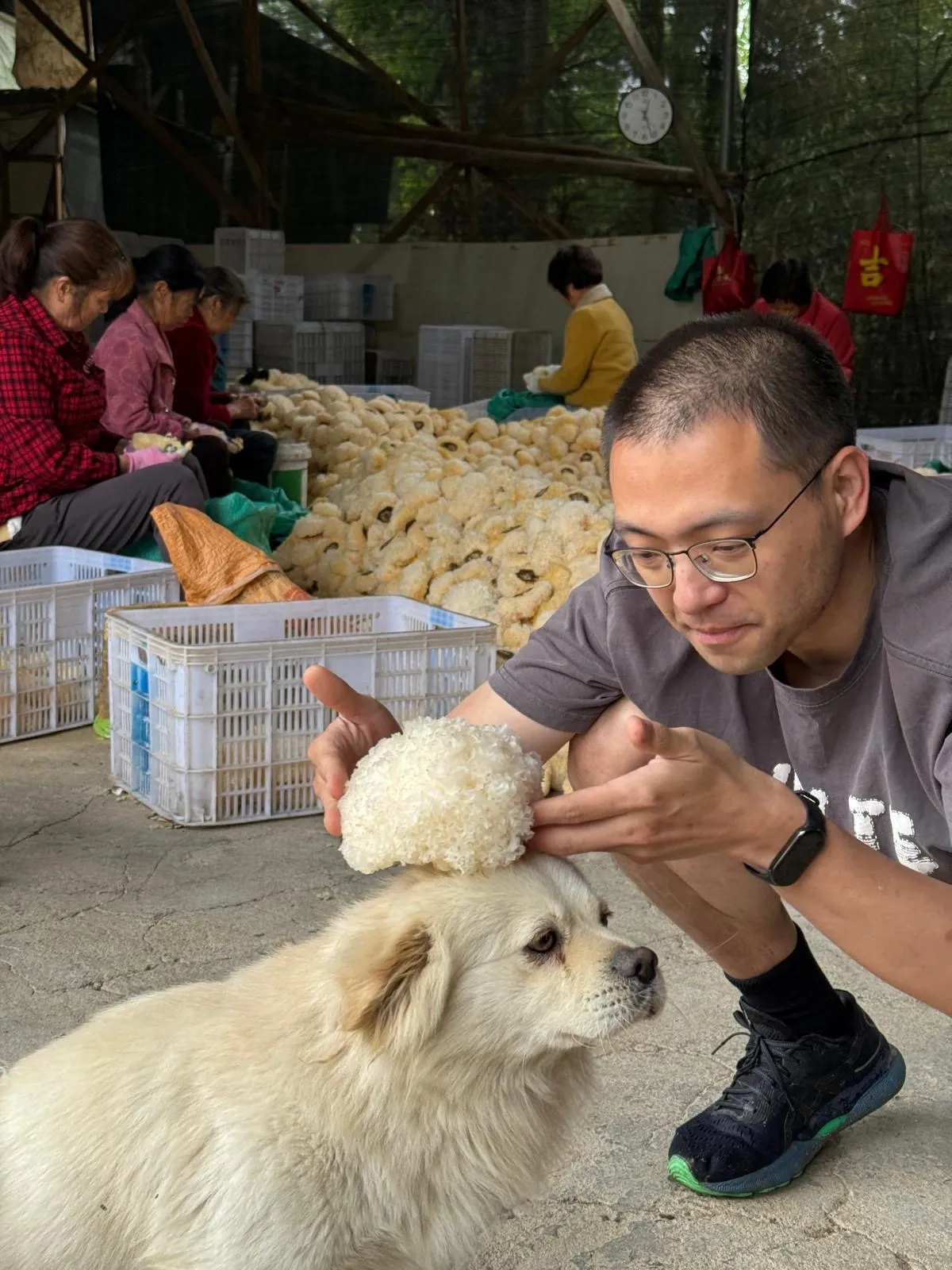
The fruiting body is the spore-producing structure, the part most people simply call the mushroom: the cap and stem of shiitake, the bracket of reishi, the white spines of lion’s mane. It is the material most traditional use refers to. Beta-glucans are structural compounds of the fruiting body, which is why they are the usual marker for fruiting body powders and hot water extracts.
What is mushroom mycelium?
Mycelium is the vegetative network of the fungus, the fine threads that grow through wood or a culture medium before any mushroom appears. It is the same organism at a different stage, with a different composition. Grown in liquid fermentation and separated from the medium, it is pure mycelium.
What is mycelium on grain?
Mycelium can also be grown on a solid medium such as rice or oats, then dried and milled together with it. The finished powder contains mycelium and some or all of the grain it grew on. On labels it appears as mycelium, mycelial biomass, myceliated grain or full spectrum.
Fruiting body vs mycelium vs mycelium on grain
| Fruiting body | Pure mycelium | Mycelium on grain | |
|---|---|---|---|
| What it is | The mushroom itself | The fungal network, separated from its medium | The fungal network plus the grain it grew on |
| How it is produced | Cultivated, harvested, dried | Liquid fermentation, then separation | Solid cultivation, milled whole |
| Beta-glucans | Structural, the usual marker | Low | Low, with starch from the grain alongside |
| Compounds it is chosen for | Hericenones in lion’s mane, ganoderic acids in reishi | Erinacines in lion’s mane, adenosine in Cordyceps CS-4 | Depends on how much grain remains |
| First question to ask | Which extraction, which carrier | Which strain, which fermentation | How much substrate is in the finished powder |
When mycelium is the right material
Mycelium is not a lower grade of mushroom. Two examples.
Lion’s mane carries hericenones in the fruiting body and erinacines in the mycelium. A buyer who wants erinacines needs a properly fermented mycelium ingredient. A fruiting body extract will not supply them.
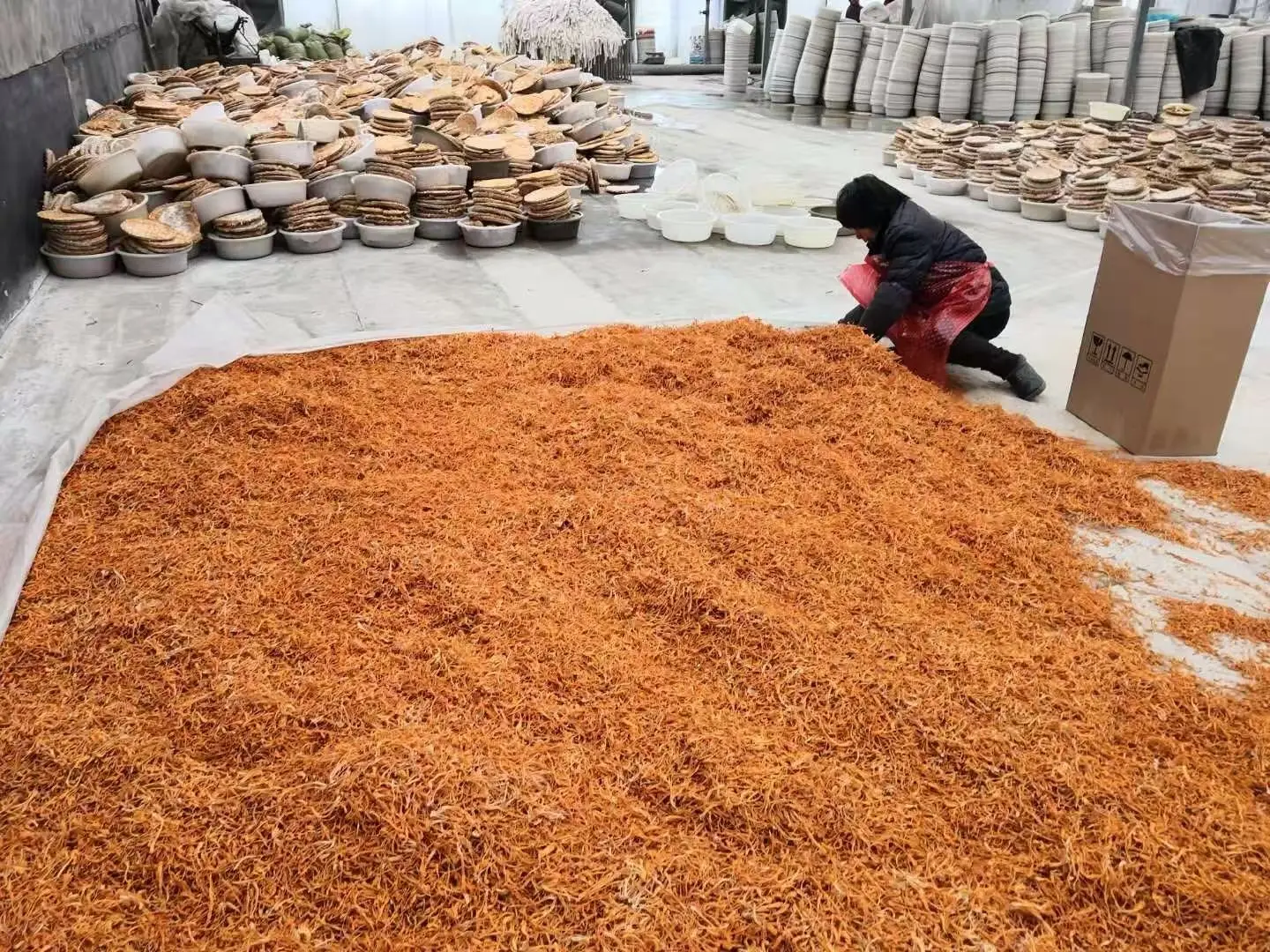
Cordyceps CS-4 is fermented mycelium of a defined strain. It is an established ingredient in its own right, and it is specified differently from a Cordyceps militaris fruiting body. Yi covers this in How to Read Cordyceps Labels in Europe.
The right choice depends on the species, the target composition, the process, the application and the market. The problem is never mycelium. The problem is material that is not declared.
Why “full spectrum” does not answer the question
Sometimes full spectrum describes a deliberate design that combines fruiting body and mycelium. Sometimes it describes the whole cultivation mass milled together with the grain. The words alone do not say which. Ask what went into the bag.
How grain changes the numbers
Grain brings starch. A simple total polysaccharide test counts starch together with mushroom polysaccharides, so a powder with a lot of grain can still report a high polysaccharide figure. Ask for a beta-glucan method, not a total polysaccharide figure.
A number is a measurement, not a verdict. Ask for the method next to every result.
Five questions to send a supplier
- What is the scientific name, and which fungal material is it: fruiting body, pure mycelium or myceliated substrate?
- If it is mycelium, was it separated from the growth medium? If not, how much substrate remains in the finished powder?
- Is it a powder or an extract? For an extract: which solvent, and is a carrier added?
- Which marker is specified, and by which method?
- Does the COA belong to the lot that will ship?
Not sure what your current ingredient is?
Send Yi the COA or the specification sheet. Yi reads it and writes back what the document proves, what it does not prove, and which questions to send to the supplier. → Send a COA for a second opinion
Sourcing fruiting-body extracts and powders? → See what Yi supplies
Questions buyers ask
Is fruiting body better than mycelium?
Neither is better in general. They are different materials. Fruiting body is the usual choice for beta-glucans and for compounds such as hericenones or ganoderic acids. Mycelium is the source of erinacines in lion’s mane and the basis of Cordyceps CS-4.
Does mycelium contain beta-glucans?
Less than the fruiting body. Beta-glucans are a structural compound of the fruiting body, and mycelium carries little of them.
What does “fruiting body” mean on a label?
It should mean the ingredient was made from the mushroom itself, with no mycelium and no growth substrate. Check that the specification says so, not only the front label.
How can a buyer tell whether a powder contains grain?
Ask the supplier to state the fungal material and whether cultivation substrate remains in the finished ingredient. Then check which method stands behind the polysaccharide or beta-glucan figure.
More from Yi Loves Mushroom
-
 What is really in a Lion’s Mane extract
 -
 How to Read Cordyceps Labels in Europe
 -
 Understanding Reishi product forms Is the first step before reading the label
 -
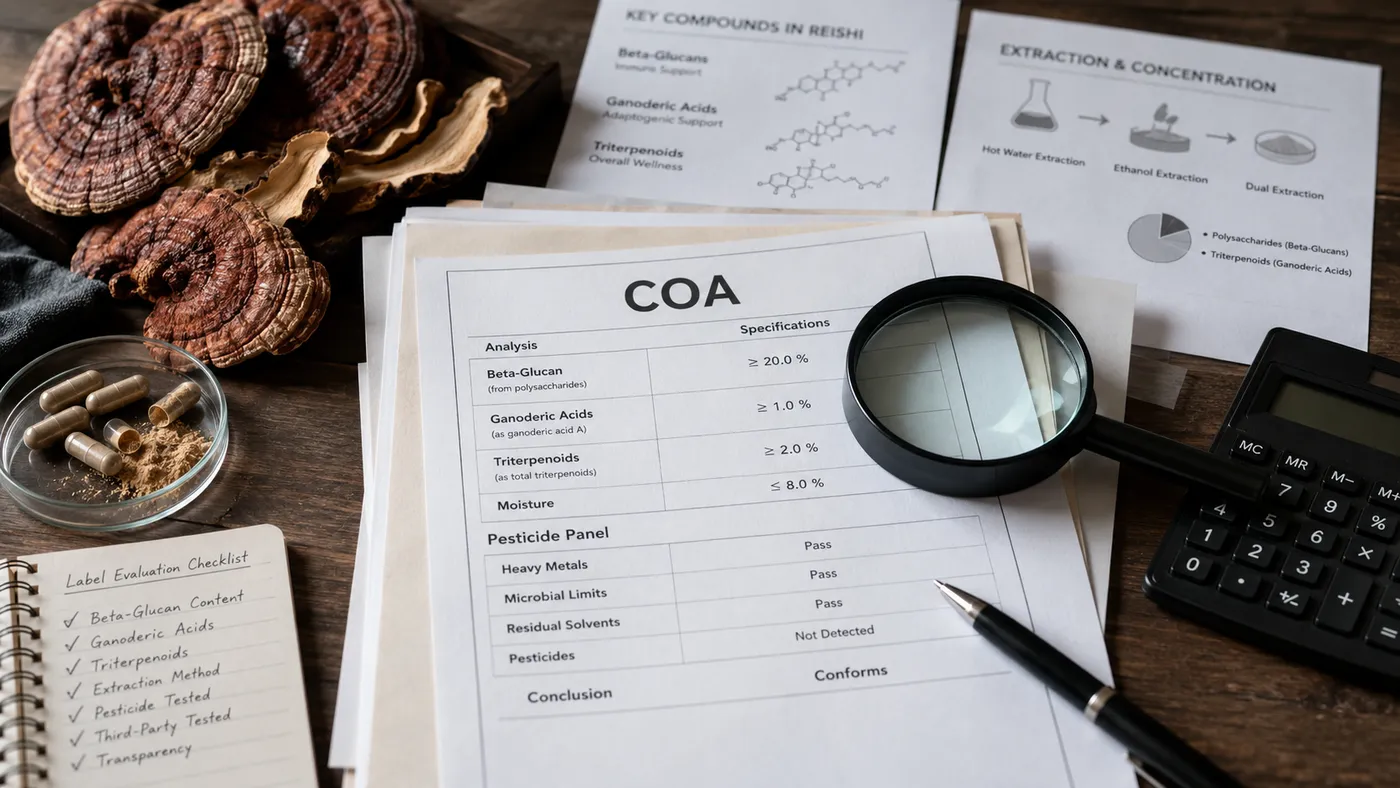 Reading a reishi label is not the same as understanding the product
 - How to think about mushroom products: not the best product, but the right product
-
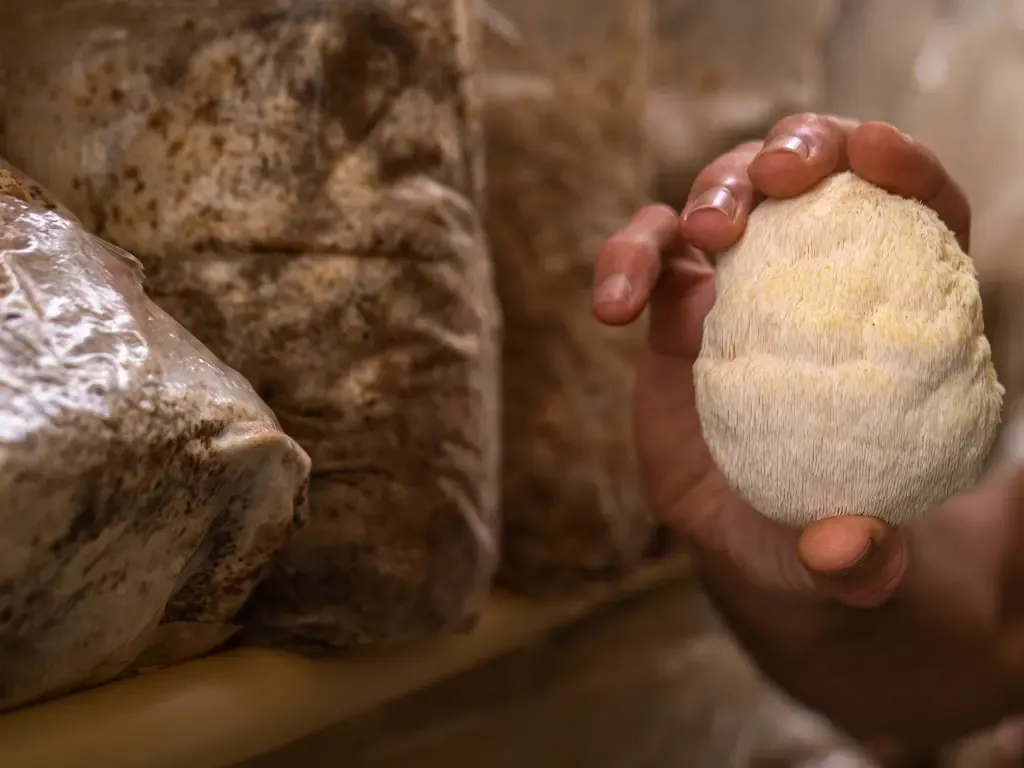 Lion’s Mane for mood, cognition and healthy ageing