Does Lion’s Mane Need to Be Extracted?
Whole fruiting body powder and extracts, starting with a pot of soup
In this article 10 sections
- Choosing between fresh mushrooms, powder, and capsules2 min
- How I choose the processing method4 min
- What is already in dried lion’s mane?6 min
- What remains in the extraction residue?2 min
- What happens after we eat it?3 min
- What did people actually take in the studies?3 min
- Does a higher percentage give you more per day?2 min
- Why drying the extract can be difficult7 min
- How carriers and added powder affect the numbers4 min
- Why I start with whole fruiting body powder2 min
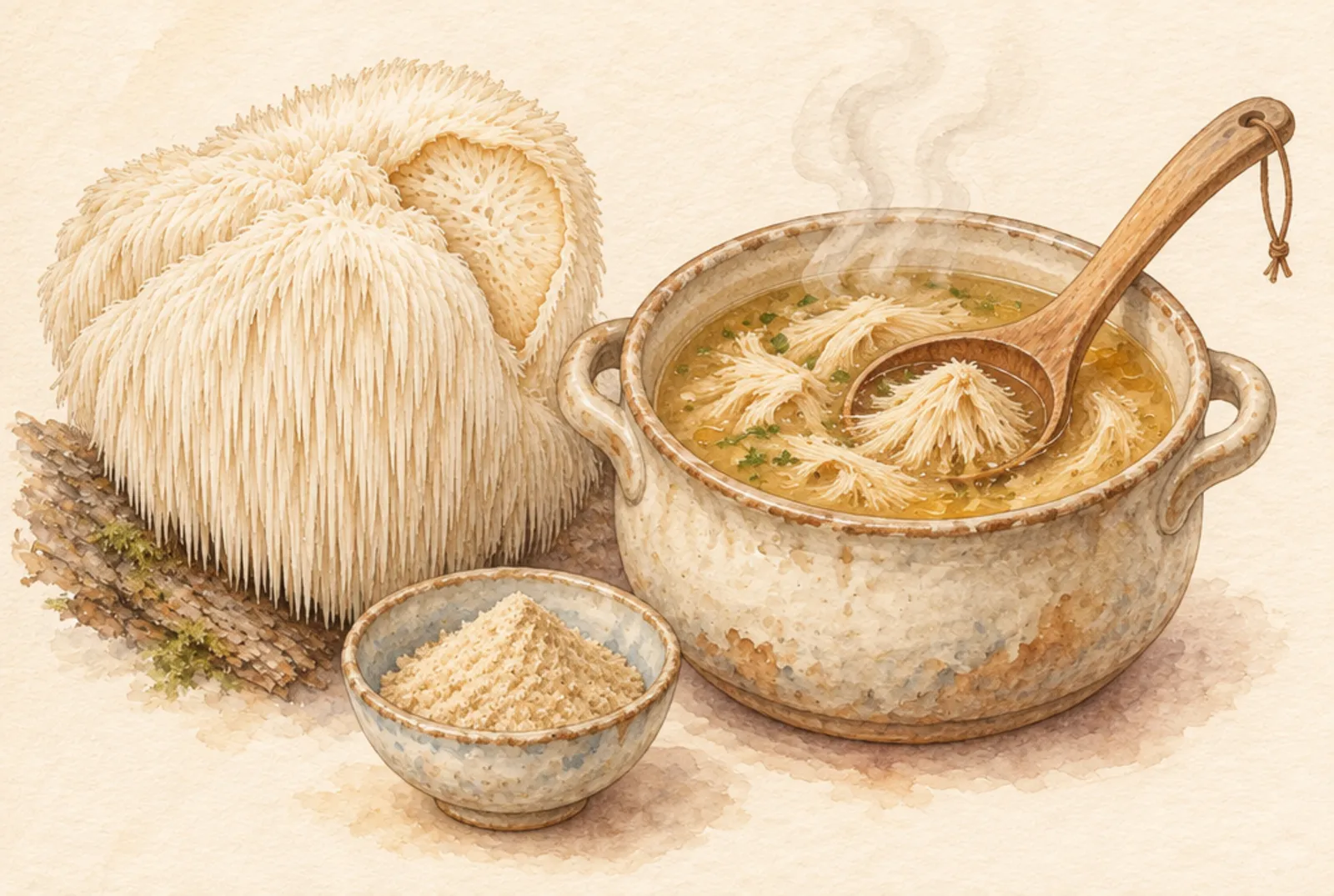
If you made a pot of lion’s mane mushroom soup, would you drink just the broth, eat just the cooked mushrooms, or have both?
For everyday supplementation, you don’t need a lion’s mane extract. I start with clean whole fruiting body powder or cook the fresh mushroom as food. Several small human trials used the powder directly. I consider extraction when a recipe needs a soluble ingredient, a study used a specific preparation, or I need to reach a defined amount of a compound. [1] [22] [23]
How would you eat a pot of lion’s mane soup?
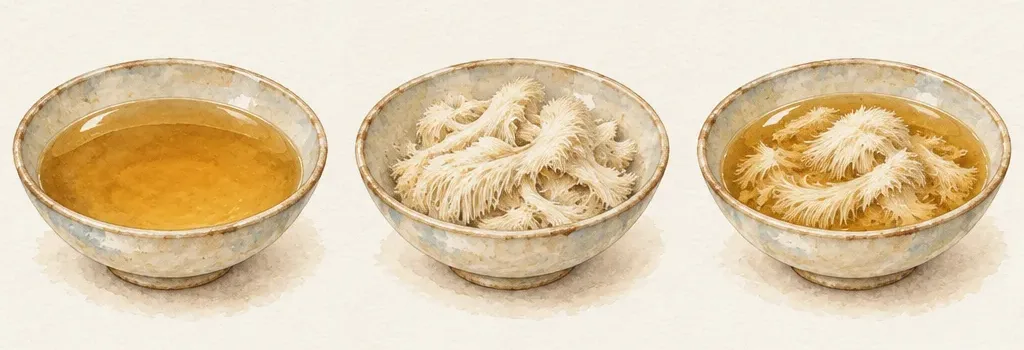
Figure 1. Three ways to eat a pot of lion’s mane soup
Choosing between fresh mushrooms, powder, and capsules
Can I just cook fresh lion’s mane? Yes. Sauté it or put it in soup. At around 90% moisture, 100–200 g fresh contains roughly 10–20 g of dry matter. A cooked portion and a few grams of milled powder differ in amount and preparation. [42]
How many capsules hold 2–3 g? Four to six at 500 mg of mushroom powder per capsule. A size 0 capsule can hold that much of some powders, depending on density. Check the label for mushroom weight per capsule or serving. The 2–3 g is a calculation example. [43]
Five things I check on a label or batch report
-
Identity. Look for Hericium erinaceus and the part used: fruiting body, mycelium, or mycelium grown and milled with its grain.
-
Added ingredients. Check for carriers and any whole powder blended back into an extract. Ask for proportions if they matter to the purchase.
-
β-glucan test. Ask to see the method and the result for the lot you’re buying. Compare numbers reported on the same moisture basis.
-
α-glucan and starch. Ask for α-glucan data and, where relevant, a starch test. An α-glucan result alone can’t tell you how much grain or carrier is present. [29] [46]
-
Processing and batch checks. Look for the intended use and how the maker controls microbes. If heat treatment is used, ask what it does. Check for batch results covering microbes, relevant metals, and pesticide residues.
Commercial disclosure. I’m a co-founder and head of sourcing at Aloha Fungi, which supplies mushroom ingredients, including extracts. [45]
How I choose the processing method
I usually eat the mushrooms and drink the broth. Factory water extraction selects what goes into the liquid, just as simmering does. I’ve made mushroom extracts and dealt with the costs of concentration, drying, yield losses, and testing. A process that makes sense for reishi may serve a different purpose with lion’s mane. I start with how the material will be used.
| Material and intended use | Examples | What I start with |
|---|---|---|
| Fruiting bodies commonly cooked and eaten as food, for everyday dietary use | Lion’s mane contains β-glucans, hericenones, and hericenes. Shiitake contains β-glucans and eritadenine. | The whole food or clean, finely milled fruiting body powder with appropriate heat treatment and microbial controls. I start with the whole material and then decide whether separation serves a purpose. |
| Tough materials whose whole tissue is rarely eaten as a dish | Mature reishi contains polysaccharides that can be extracted with water and ganoderic acids that can be enriched with aqueous ethanol. Turkey tail contains cell wall polysaccharides. | A decoction, water extract, ethanol extract, or other preparation suited to the target. Specify what’s extracted, the yield, and what’s added. |
| A specific material chosen to match a study | A human trial used cultured lion’s mane mycelium standardized for erinacine A. Matching the trial calls for that type of mycelial material. [18] | Match the species, fungal part, preparation, and daily amount. “Lion’s mane” alone is too broad. |
| A formulation that needs full water solubility, such as a clear drink without sediment | Lion’s mane fractions selected for water-soluble polysaccharides and other soluble components. | Pay for solubility if the recipe needs it. Explain how it helps the formulation, what changes in the composition, and what health evidence applies. |
For a brand, whole powder has a practical cost: more capsules at the same gram weight, or suspended particles, sediment, and texture in a drink. A clear drink may be worth formulating with a soluble fraction. If I’m selling a whole powder, I’d explain its value through the identifiable raw material, lot testing, and how much mushroom is in each serving. “10:1” is easy to print on a label. A well-specified powder gives the customer something they can check.
Grinding mainly changes particle size. There’s no extraction step to remove a fraction of any metals or pesticide residues that come in with the raw material. Microbial counts can change with heat treatment, handling, and storage. I want raw-material controls, a process suited to the intended use, and finished-lot results for both powders and extracts.
For mycelium, I also ask what was harvested. A powder made by drying and milling grain together with the mycelium grown on it can include residual grain starch. Mycelium harvested from a liquid culture and an intact fruiting body are different materials again. Match the material to the research and ask the supplier how it was made. [18] [46]
Why reishi is prepared differently
You can simmer lion’s mane or shiitake until tender and eat the whole mushroom as a dish. A mature reishi fruiting body is corky, tough to chew, and hard for the human digestive system to break down fully. Simmering it to make a decoction lets you take the fraction you want in water and strain out the tough tissue.
Reishi can feel like wood. One study measured 29.2 ± 0.3% crude fiber in a fruiting body sample with about 11% moisture. That figure is specific to the sample and the crude fiber test. Lignin content and the total fraction that humans cannot digest would require separate measurements. A solid-state nuclear magnetic resonance study of reishi cell walls found a rigid network of β-glucans, chitin, and chitosan. Measurements of the fruiting body and its cell wall are a better basis for explaining reishi’s toughness than lignin figures for the wood it was grown on. [40] [21]
Think of coffee. We brew it for the drink and usually filter out the grounds. The filter serves the drink we’re trying to make. Spent coffee grounds have also been studied as an ingredient in biscuits. [41]
The right process depends on the material and what you want from it, whether you’re working with reishi, turkey tail, sanghuang, chaga, or Polyporus umbellatus. Poria is a case of its own. The part used is a sclerotium, which has also traditionally been milled into flour for cakes. The part, texture, and way it’s eaten give me more to go on than a label like “edible” or “medicinal.” [33]
What is already in dried lion’s mane?
In the lion’s mane fruiting body powders I’ve handled and tested, some batches came in above 25% β-glucan, and some exceeded 40%. Hericenones and hericenes together came to about 0.2–0.3%. Those components were present before the material ever went into an extraction tank. For the comparisons below, I use 25% β-glucan as the minimum specification for whole powder.
The composition figures below are given per 100 g of dried fruiting body. The published studies and my production observations used different samples, so these numbers can’t be added up into a standard composition. Process yields are identified separately.
| Component | Amounts reported in dried fruiting bodies | How the component can be separated |
|---|---|---|
| Free monosaccharides and disaccharides | One set of cultivated Japanese samples contained 0.7–3.0 g/100 g in total. That included 0.2–2.1 g trehalose and 0.1–0.7 g glucose, along with fructose, arabinose, and, in some samples, sucrose. [3] | These can enter the water. With no further fractionation, they can contribute to the solids in the concentrate. |
| Sugar alcohols | The same samples contained 2.4–11.3 g/100 g, including 2.3–11.0 g arabitol and 0.1–0.4 g mannitol. Arabitol has also been identified in a water extract. [3] [4] | Extract with water and follow with membrane fractionation or further separation as needed. Sugar alcohols are a distinct class of compounds. |
| Oligosaccharides | Fractions such as HEO-A, made up of xylose and glucose, have been isolated. A total weight percentage applicable to all raw material is unavailable. [5] [6] | Use water extraction followed by membrane or chromatographic fractionation. Chain length and composition affect recovery and drying behavior. |
| β-Glucans | My comparison specification for whole powder is ≥25 g/100 g. This assay measures the whole sample. | Some β-glucans enter hot water. Others stay in the cell wall network. Researchers use alkali, enzymes, or other treatments to release more of them. [7] [8] |
| α-Glucans | Some types can be extracted with water and others are poorly soluble. One study isolated a poorly soluble α-glucan fraction at a process yield of about 5%. [9] [10] | Water extraction, ethanol precipitation, or alkaline extraction can be used, depending on the structure. Lion’s mane itself contains α-glucans, so an α reading alone cannot establish that maltodextrin was added. |
| Neutral heteropolysaccharides and acidic polysaccharides | One fractionation study obtained about 2.7 g of a crude water-extracted polysaccharide fraction per 100 g of raw material, followed by crude alkaline fractions of about 1.3 g and 2.4 g. These are process yields. [11] | Water extraction, ethanol precipitation, and membrane fractionation are options. Further purification often calls for chromatography. Some components remain in the water extraction residue. |
| Chitin and cell wall complexes | Chitin has been isolated from water extraction residue. Published isolation yields from the residue don’t give a universal chitin percentage for the dried mushroom. [7] [13] | After ordinary hot water extraction, most stays with the solids. Isolating chitin requires further treatment. |
| Hericenones and hericenes | In my raw material the two groups together came to 0.2–0.3 g/100 g. Italian samples measured for individual compounds had about 0.050–0.156 g of hericenone C and less than 0.002 to about 0.019 g of hericenone D per 100 g. The assays covered different compounds. [14] | Aqueous ethanol can enrich some lipophilic compounds. Supercritical CO₂ can recover a lipophilic oil fraction. Isolating an individual compound takes further purification. |
| Ergothioneine and ergosterol | One dried fruiting body sample contained 0.096 g/100 g ergothioneine. Another analysis reported 0.05–0.20 g/100 g ergosterol across the tested fruiting body or mycelial materials. That range covers both types of material. [16] [17] | Ergothioneine tends to go into the water phase. Ergosterol is lipophilic. The same process can recover them in different proportions. |
Lion’s mane also contains protein, lipids, minerals, and other nutrients that vary with the raw material. I’ve focused on the components most often confused in extraction, testing, and product claims.
Whole fruiting body powder retains the mix of components in the fruiting body. A formulation targeting erinacine A starts with the appropriate cultured mycelium. Concentrating a fruiting body extract won’t turn it into that material. [18]
Polysaccharides and β-glucans come in different forms
Free sugars are small molecules. Oligosaccharides are short chains of sugar units, and polysaccharides contain more units. Glucans are made of glucose. Heteropolysaccharides may contain other sugars, and some acidic polysaccharides contain uronic acids. Sugar alcohols are a separate class. The dry solids recovered from a water extract can include several of these categories.
The terms β-(1→3) and β-(1→6) describe how the sugar units are linked. Solubility describes how the material behaves under particular conditions. Molecular structure, branching, molecular weight, interactions between molecules, and associations with proteins and chitin can all affect what comes out during extraction.
| Lion’s mane glucan fraction | Where it is found or how it is structured | What happens during or after water extraction |
|---|---|---|
| Water-extractable β-glucans | Researchers have isolated types containing (1→3) and (1→6) linkages. The structures recovered depend on the extraction and fractionation conditions. [12] | The filtrate contains the fraction selected by the process. Calculating recovery requires the weight and assay result for each stream. |
| Poorly soluble β-glucans rich in (1→3) linkages, held in a hydrogen-bonded network | These remain in the cell wall network after water extraction. [7] | Alkaline treatment can separate more of the fraction. The assay result for the whole sample can’t tell you the yield from water extraction. |
| Poorly soluble β-glucans rich in (1→6) linkages, associated with proteins and chitin | Another fraction within the complex cell wall matrix. [7] | Researchers have used alkali, enzymes, and additional treatments to investigate it. Hot water alone recovers only part of the material. |
| Poorly soluble β-glucans rich in (1→3) linkages, associated with proteins and chitin | Structurally distinct from the preceding fraction and also retained in the poorly soluble matrix. [7] | Further fractionation is needed. The poorly soluble β-glucans include several distinct fractions. |
| α-Glucans | These include water-extractable types and a water-insoluble α-(1→3) type. [9] [10] | Where they end up depends on their structure. The α result in a glucan assay gives a limited view of the structures naturally present. [29] |
A certificate of analysis (COA) that says “40% β-glucan” still leaves me asking which glucans are present, where they sit in the mushroom, how much the process recovers, and what happens when you consume the material.
What remains in the extraction residue?
Ookushi and colleagues estimated 14.9 g of total glucan per 100 g of dried fruiting body. In their 2006 microwave study, the authors used a Megazyme mushroom–yeast assay kit to measure β-glucan in the unextracted residue. My ≥25% figure is a batch specification for β-glucan in whole powder. The published estimate and my specification refer to different samples and analytical quantities. [7] [29] [47]
| How the residue was studied | What researchers measured | How I read it for product selection |
|---|---|---|
| Glucans isolated after microwave-assisted water extraction | The microwave-assisted water step accounted for about 22% of the estimated total glucan, equivalent to roughly 3.3 g per 100 g dried mushroom. Alkaline and enzyme-assisted steps recovered more from the residue. [7] | Most of the estimated glucan stayed out of the first water fraction in this experiment. |
| Water-soluble and alkali-soluble cell wall polysaccharides tested in cells | The researchers isolated fractions of different structures and molecular weights. An alkali-soluble fraction showed greater activity in a particular macrophage assay. [19] | The alkali-soluble fraction showed greater activity on that cell assay. |
| Steam explosion of the residue followed by extraction and fermentation | A fraction recovered at a reported yield of 13.36% contained 58.20% polysaccharides and 47.93% β-glucan. Fermentation with human fecal microbiota in vitro changed microbiota and short-chain fatty acid measures. [20] | The residue can supply a useful fermentation substrate. These percentages describe the fraction isolated after further processing. |
This is what I mean when I say something more useful could be left in the residue. If I’m after a particular cell wall glucan, or studying a substrate that gut microbes can use, keeping only the water-soluble portion may separate out exactly what I’m looking for.
For a batch-level comparison, I’d use the same assay and dry-matter basis for the starting powder, dried extract solids before any carrier is added, and dried residue. Multiplying each result by its dry stream weight tells me where the measured glucan went.
What happens after we eat it?
When someone tells me their extract is fully soluble and therefore easier to absorb, I ask which compound they mean. How much is released from the material? Where does it act? What did a study find after people or animals took it by mouth?
Enzymes digest protein. Bile and digestive enzymes help process fat. Some material that resists digestion in the small intestine reaches the colon, where microbes can use part of it. Water solubility matters to a formulator. To compare what the body can use from a powder and an extract, I need evidence from digestion or oral intake.
How the body uses different parts of whole food
From release during digestion to absorption, gut activity, and measured outcomes
- Whole food or powderChewing, milling, and cooking change the food matrix.
- Digestion in the small intestineEnzymes and bile help process food. Absorption depends on the component.
- Outcomes to measureAbsorbed amount, gut measures, tolerability, and the endpoints used in intake studies.
- Whole food or powder
- Material that reaches the colonMicrobes can use some of it to make short-chain fatty acids and other metabolites.
- Outcomes to measure
The pathway depends on the component. A glass of water only tests solubility under those conditions.
Figure 2. How the body can use different components of whole food
| What we eat | How the body may use it | What to look at |
|---|---|---|
| Protein | Enzymes break it down into amino acids and small peptides that can be absorbed and metabolized. A human study compared absorption after meals providing peptides or free amino acids. [37] | The digestion of protein tells us little about the absorption of a ganoderic acid or a hericene. |
| Fats and lipophilic compounds | Fat digestion involves enzymes, bile, and mixed micelles, which have been measured directly in human intestinal fluid. [38] | A compound that doesn’t dissolve in plain water can still be absorbed. How much is absorbed has to be measured for the particular compound. |
| Some polysaccharides and dietary fibers | Some act locally in the gut or are metabolized by gut microbes. A human tracer study documented how short-chain fatty acids from the colon enter circulation and are metabolized. [34] | The body can use the metabolites without absorbing the intact polysaccharide. Fermentability varies across fibers. |
| Chitin and cell wall complexes | Mammalian studies have identified processes involving gastric chitinase, and investigators also detected a related enzyme in human stomach tissue. [32] | Cell wall composition and processing affect what the digestive system can access. |
Chewing, milling, and cooking can also change the food matrix. A shiitake cooking study found no clear glucan loss under the conditions tested, while the retention of some small molecules varied with the method. I take processing and intended use into account when I evaluate a fine powder. [36]
I value the whole fruiting body for the range of components it retains. For everyday use, that, the forms researchers have actually tested, and the price give me a basis for choosing it.
What did people actually take in the studies?
Product ads often cite studies on nerve growth factor, immunity, cognition, or the gut microbiota. I go straight to the methods section. Did the researchers use an isolated compound, a particular extract fraction, standardized mycelium, or dried fruiting body powder? Did someone take it by mouth, or did researchers add it directly to a cell culture? Those details determine how much the paper can tell me about a product.
| Study and participants | Material and amount actually used | What the researchers found |
|---|---|---|
| Mori, 2009. 30 adults with mild cognitive impairment | Tablets providing about 2.88 g of dried fruiting body powder per day for 16 weeks. [1] | Cognitive scores differed between groups at weeks 8, 12, and 16. Scores declined after supplementation stopped. The study used dried powder. |
| Nagano, 2010. 26 women analyzed | Fruiting body powder baked into biscuits, 2 g per day for 4 weeks. [22] | Some self-reported symptom items differed between groups. The significant change on the depression scale came from a before-and-after comparison within one group. |
| Saitsu, 2019. 31 healthy adults over 50 analyzed | Fruiting body powder. The methods specify four 0.8 g supplements per day, totaling 3.2 g per day for 12 weeks. [23] | Of the three cognitive tests, the Mini-Mental State Examination (MMSE) showed an improvement signal. The other two showed no significant differences. |
| Surendran, 2025. Healthy young adults | One 3 g dose of a fruiting body extract powder labeled 10:1. The paper describes water and ethanol extraction, spray drying, and a formulation containing 5% maltodextrin. [24] | Overall cognitive and mood measures showed no significant improvement. One manual dexterity task showed a signal. The single-dose study and the multiweek powder trials answer different questions. |
| Cho, 2022. 18 senior dogs | Diets containing 1.24% or 2.48% lion’s mane powder for 16 weeks. [25] | Some gut microbiota measures changed in the higher inclusion group. The trial tested powder in the diet and focused on gut microbiota. Evaluating canine cognition or comparing powder with an extract would take a separate study. |
Several human trials used whole fruiting body powder directly, and all three powder trials in the table were small. Shimizu and Ohnuki co-authored both the Nagano and Saitsu studies. The Mori paper lists several authors from Hokuto Corporation’s mushroom laboratory. I use these trials to establish what was studied and at what dose. A direct human comparison would be needed to rank whole powder and extracts. [1] [22] [23]
Animal studies use a wider range of materials, including whole powder, water extracts of fresh fruiting bodies, and extracts enriched in particular compounds. The dog feeding study gives brands a starting point for developing pet food ingredients. A rat model of nerve injury, a dog microbiota measure, and a human cognitive test each tell us something different. [8] [25] [26] [27]
There is research on whole shiitake as food, too. Dai and colleagues studied 52 healthy young adults who ate 5 g or 10 g of dried shiitake daily for 4 weeks and reported changes in some immune measures. The study compared two intake levels and had no parallel group that ate no shiitake, so it cannot establish disease prevention. What matters for this comparison is that researchers studied the whole food in people. [35]
Does a higher percentage give you more per day?
Extraction selects components and then concentrates the selected fraction. A percentage can rise because the target component was enriched or because other material was removed. Start by multiplying that percentage by the amount someone actually takes each day.
| Example material | Daily amount | Labeled β-glucan | Intake based on the label |
|---|---|---|---|
| Whole fruiting body powder | 2 g | 25% | 500 mg |
| Extract powder | 1 g | 50% | 500 mg |
| Extract powder | 0.5 g | 50% | 250 mg |
This calculation assumes comparable assays. The same milligram amount in two different structures or food matrices can behave differently in the body. A higher percentage can let you put less powder into a capsule. Any additional benefit to the person taking it is a separate question.
A label percentage alone leaves the question of effective dose open. In the literature I reviewed, I found no direct controlled comparison using comparable lion’s mane materials that showed better outcomes in humans when the β-glucan specification rose from 25% to 40% or 50%.
What the hericene A mouse dose tells us
One study gave mice 5 mg/kg per day of isolated hericene A for 31 days. Using the body-surface-area factors in FDA’s drug-development guidance, 5 × 3 ÷ 37 gives about 0.41 mg/kg, or roughly 24–28 mg per day for a 60–70 kg adult. This is an arithmetic comparison of scale. A human trial would have to establish the effect and dose for people. [15] [44]
At the 0.2–0.3% combined content I’ve seen, 3 g of whole powder contains 6–9 mg of hericenones and hericenes together. Hericene A is only one component of that total. If a product were designed to deliver a specific amount of hericene A, I’d start by measuring that compound in the actual raw material and weighing the cost of enrichment. The combined marker number can’t answer that question.
The same care applies to erinacine A. Rat pharmacokinetic data and a human study of erinacine A-enriched cultured mycelium tell me about the specific materials tested. To match the human study, I’d look for a comparable mycelial preparation and dose. [18] [39]
Why drying the extract can be difficult
Talk of extracting the “good stuff” can skip over an expensive step at the factory. You still have to turn a concentrate into a stable powder you can collect and pack.
I took the photo below during production. On the left is a membrane-separated stream rich in small molecules that we couldn’t dry into a loose powder under the conditions we used. On the right is the water-soluble fraction we selected with a ceramic membrane and could dry without a carrier. Both came from the same lion’s mane water extract. Only the fraction on the right worked for the powder we were making. [2]
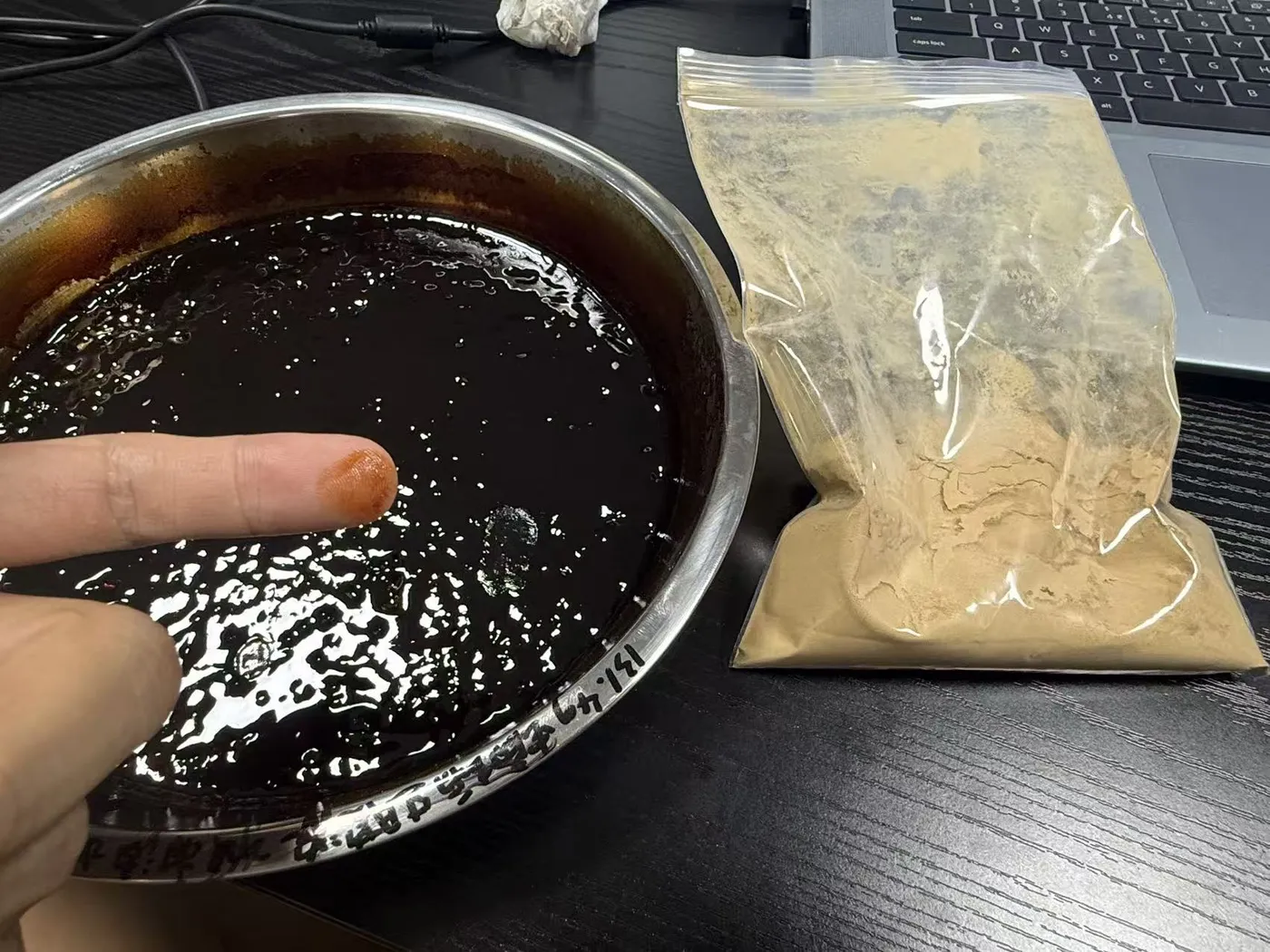
Figure 3. Two streams from the same lion’s mane water extract. Production photo by Yi.
The next photo shows the inside of a spray dryer. When we concentrated the whole water extract without suitable fractionation or adjustments to the formulation and drying conditions, it stuck to the dryer. It was hard even to scrape off.
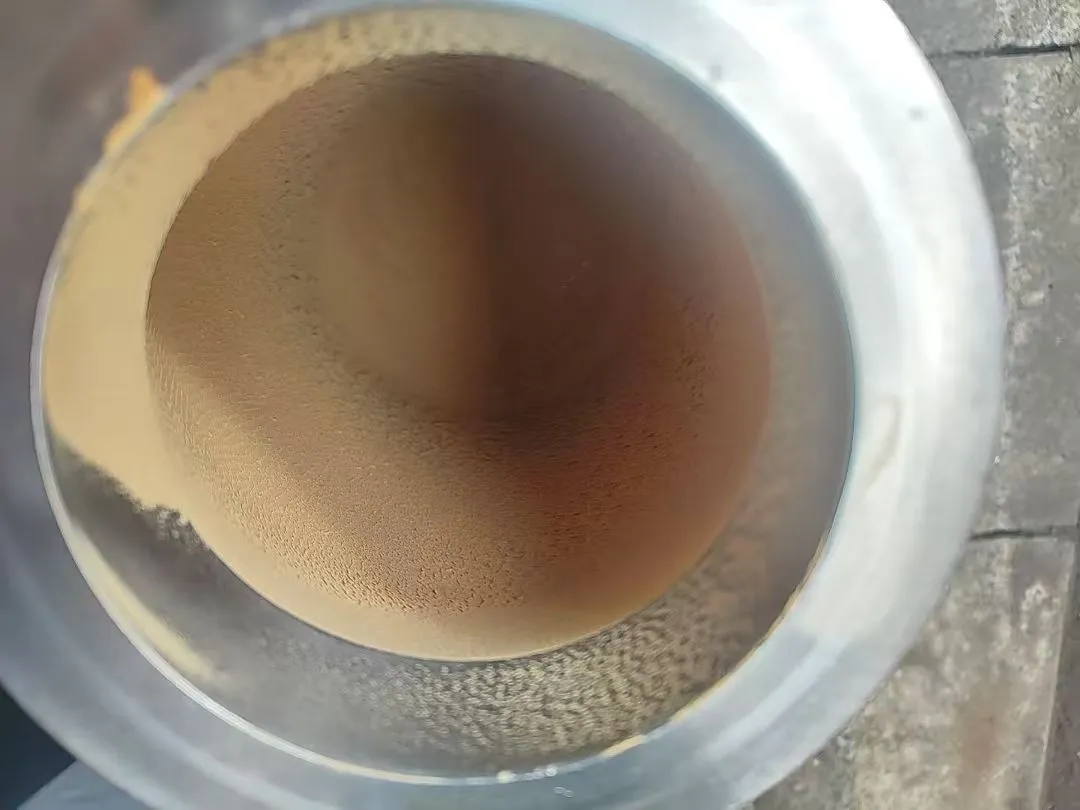
Figure 4. Lion’s mane concentrate stuck inside the spray dryer. Production photo by Yi.
| Drying method | What makes it difficult | What I look for |
|---|---|---|
| Spray drying | Small sugars and moisture affect the glass transition temperature. As the material softens and gets sticky, it can adhere to the dryer. Drying experiments have examined these effects in model mixtures. [30] | Powder recovery, caking, moisture uptake, and the use of carriers such as maltodextrin. |
| Freeze drying | A sugar-rich concentrate can have a low collapse temperature. The kind of sugar alcohol present and its state of crystallization can also affect the result. [31] | Product temperature, pressure, final moisture, and the condition of the powder when it comes out. The equipment name tells me little about the result. |
| Vacuum drying | Lower temperatures can help. Viscosity, residual moisture, and mass transfer still affect drying and how easily the material can be removed. | In my trials the whole concentrate was still hard to turn into a stable powder. Some fractions were easier to handle after separation. |
The photos show what happened with the materials and conditions we used. To find out how much each sugar contributed to the stickiness in the left-hand stream, I’d need to test the fractions separately. For a powder described as “freeze dried,” “water extracted,” or a “pure extract,” I still ask what goes into the final formulation.
How much is left from 100 kg of raw material?
In one process I worked on, about 100 kg of dried lion’s mane fruiting bodies yielded about 35 kg of dry solids in the water extract. After ceramic membrane fractionation, the stream we could spray dry without a carrier under those conditions accounted for about 7 kg. The other 28 kg had also passed into the water extract and went into a different stream. Further ethanol precipitation of the selected 7 kg fraction yielded about 3.5 kg of dry powder. [2]
Where the solids go during water extraction
- 100 kgDried inputWhole lion’s mane fruiting bodies
- 35 kgExtracted solidsDry solids recovered in the water extract
- 7 kgSelected fractionCould be spray dried without a carrier
- 3.5 kgDry powderAfter further ethanol precipitation
- 35 kgExtracted solids
- 28 kgOther fractionFrom the same extract, left out of this powder
At 7% yield, 1 kg of finished powder takes about 14.3 kg of dried raw material.
Yi’s production example. The 3.5 kg comes from further processing the 7 kg fraction.
Figure 5. Mass balance for water extraction and fractionation of 100 kg of dried fruiting bodies
The 7 kg and 28 kg are two portions of the 35 kg of extracted solids. The 3.5 kg comes from further processing the 7 kg portion. A stream that’s left out of one product may still have another use.
| Desired output | Material balance in practice | What adds to the cost |
|---|---|---|
| Whole fruiting body powder | Most of the raw material’s dry matter remains in the powder after milling and sieving. Check production records for actual losses. | Raw material, heat treatment or microbial controls, milling, sieving, and packaging. |
| Solids from the whole water extract | About 35 kg per 100 kg of dried material. The full stream was hard to dry directly into a stable powder under the conditions we used. | Water extraction, filtration, concentration, and drying. A carrier, if used, also affects formulation cost and labeling. |
| Carrier-free spray-dried powder after fractionation | About 7 kg per 100 kg. Each kilogram of powder took about 14.3 kg of dried raw material. | Membrane operation, cleaning, powder recovery losses, and whether the other stream has a use. |
| Powder after further ethanol precipitation of the same fraction | About 3.5 kg per 100 kg. Each kilogram took about 28.6 kg of dried raw material. | Ethanol use and recovery, solid-liquid separation, and drying. |
| Lipophilic markers enriched with aqueous ethanol | Check the actual extract yield, compound recovery, and whether whole powder was blended back in. | Solvent, recovery, concentration, and drying. Adding powder to aid drying makes the finished product a blend. |
| Lipophilic oil fraction from supercritical CO₂ extraction | In a process I’ve worked with, 100 kg of fruiting body powder yielded about 2 kg of oil, or roughly 50 kg of powder input per kilogram of oil. | High-pressure equipment and operating costs, low oil yield, and how the remaining solids can be used. |
These yields give an idea of the scale in processes I’ve run or worked with. If the cost of a kilogram of dried raw material is C and all of it is charged to the selected fraction, the 7% yield route costs about 14.3 × C in raw material per kilogram of finished powder, before processing costs or any credit for coproducts. Use the purchase cost of the dried input for that calculation. The retail price of finished fruiting body powder is a different figure.
That affects affordability. I’ll pay for processing that solves a real problem. If the main result is to fit some of the components from two or three grams of whole powder into a single gram of more expensive powder, how much is that convenience worth to the person using it?
Checking the oil figures against the raw material
I’ve seen supercritical CO₂ oil reported at around 10–20% hericenones and hericenes combined. That looks high compared with 0.2–0.3% in whole powder. But 10–20% of 2 kg of oil is 200–400 g, while 0.2–0.3% of 100 kg of whole powder from a different batch is 200–300 g. Combine figures from separate batches or assays and you can make it look as though you recovered more than you started with.
To calculate recovery, use the input and output weights from the same batch, the same analytical method, and the same set of compounds. I also want to know what happened to the solids that stayed out of the oil.
In another process, we blended the solids from an ethanol extract with an equal weight of whole powder before freeze drying. The finished blend was half extract solids and half fruiting body powder. If the combined hericenone and hericene content is near the 0.50% specification threshold, 1 g of the blend provides about 5 mg. At 0.2–0.3%, roughly 1.7–2.5 g of whole powder provides the same combined marker weight. That gives me a cost comparison for the markers. A comparison of effects would need evidence from people taking both preparations.
How carriers and added powder affect the numbers
If 35 kg of water-extracted solids are mixed with 52.5 kg of carrier, the nominal yield is 87.5 kg. In each kilogram of the blend, 400 g comes from the extract and 600 g from the carrier. A buyer who only sees “lion’s mane extract” still needs the proportions.
What’s in a kilogram of powder blended with a carrier?
Per kilogram of blend, 400 g comes from the extract and 600 g from the carrier.
Example before drying losses. The finished formulation should disclose the actual proportions.
Figure 6. Proportions of water-extracted solids and carrier in an example blend
Let S be the cost per kilogram of water-extracted solids and P the price per kilogram of carrier. The blend costs about 0.40 × S + 0.60 × P per kilogram before further drying. Maltodextrin, resistant dextrin, and polydextrose vary in purchase price and inclusion rate. Comparing them takes quotes on the same basis. When I compare finished products, I calculate what I’m paying per kilogram of actual lion’s mane solids.
Different added ingredients can also change the assay results in different ways.
| Added ingredient | What I saw in the formulations and assays I used | How I read the result |
|---|---|---|
| Maltodextrin | It could raise the crude polysaccharide result in the colorimetric assay. With the glucan assay I used, the change mainly appeared in α-glucan, with no corresponding rise in β. | The total polysaccharide result can rise without any increase in polysaccharides from lion’s mane. |
| Resistant dextrin | I saw increases in both α-glucan and reported β-glucan. | Test the actual carrier grade and the blend, since grades can differ. |
| Polydextrose | In a comparison I ran, reported β-glucan increased without a corresponding increase in α-glucan. | The increase in the assay result came from adding an ingredient. It can’t be counted as β-glucan produced by lion’s mane. |
Those are observations for the materials, formulations, and assay conditions I used. The K-YBGL method reports β-glucan by subtracting α-glucan from total glucan. The method documentation notes that some α-glucans can cause an overestimate of β-glucan if they aren’t fully hydrolyzed. I want to see the formulation even when a report shows high β and low α. [29]
If you blend back whole powder to help with drying, disclose it. Whole powder is a useful ingredient in its own right. Buyers should be able to see how much of the product is whole powder and how much came from extraction.
What I ask about price, solubility, and composition
I know it’s possible to make a water-soluble lion’s mane powder without a carrier because I’ve done it. Making it easy to dry and use can take extra processing and cost a substantial share of the yield. Other water extraction and freeze-drying routes are publicly documented. Price and solubility alone tell me little about whether a carrier was used. [28]
If a supplier offers a low price, full water solubility, no added ingredients, and a high assay result, I ask them to account for all four in the same batch. If they’ve found a more efficient process, the inputs, outputs, and final formulation should explain it.
| What I ask the supplier | What a brand can check |
|---|---|
| How much finished powder comes from 100 kg of dried raw material? Where does each stream go? | Whether the product includes carriers or whole powder added back, and whether those additions are included in the stated yield. |
| How was “fully water-soluble” tested? How much powder and water, at what temperature, and after how long standing? | Whether the measured solubility suits the intended drink or capsule formulation. |
| Can you match the final formulation, raw material lot, assay method, and test report to the same finished batch? | Which material produced the assay result and whether all carriers and added powder were disclosed. |
| How do the formulation and daily amount in the study relate to this product? | Whether there’s enough in common to apply the research to the product. |
An input-output record and a report for the corresponding batch tell me more than another piece of paper that says “40%.”
Why I start with whole fruiting body powder
I want more people to be able to afford clean mushroom ingredients. An extraction ratio, a solubility claim, or a high assay result needs to earn its place in the price.
With edible fruiting bodies like lion’s mane and shiitake, the polysaccharides, cell walls, lipophilic compounds, and other nutrients can all be part of the same food. Researchers have also used whole fruiting body powder directly in human and animal studies. For everyday dietary use, when the formulation can accommodate it, I start with clean, properly processed whole fruiting body powder.
If I’m making a clear drink that has to stay free of sediment, I’ll pay for real solubility. If I want to match a study, I’ll look for the material and daily amount it used. For a tough material like mature reishi, I’ll use an extraction method suited to the components I want. Then I’ll disclose the yield and any carriers.
If you’re formulating a product, put whole fruiting body powder on the table first. Ask what problem the extra processing would solve. The answer should connect the raw material, process, composition, dose, and price.
And for my pot of lion’s mane soup? I’ll eat the mushrooms and drink the broth. If I can have both, why pay to discard part of the mushroom and then pay again to concentrate what’s left?
References
47 sources · tap to open
The production photographs, process yields, and assay observations are from my own work. Research results are cited for the materials each study used. Each entry includes a link and a visible URL or DOI.
[1] Mori et al. (2009). Double-blind, placebo-controlled trial of dried lion’s mane fruiting body powder in adults with mild cognitive impairment. https://pubmed.ncbi.nlm.nih.gov/18844328/
[2] Yi Loves Mushroom. What Is in Lion’s Mane Extract? Production, fractionation, and assay records. The present article follows the methods reported in the original studies for the materials they tested. https://yilovesmushroom.com/what-is-in-lions-mane-extract/
[3] Takabatake et al. Composition of cultivated lion’s mane, including free sugars and sugar alcohols in Table 5. https://www.jstage.jst.go.jp/article/jisdh1994/11/4/11_4_370/_pdf/-char/ja
[4] Tripodi et al. (2022). Composition of lion’s mane water extract and identification of arabitol. https://pmc.ncbi.nlm.nih.gov/articles/PMC9611596/
[5] Hou et al. (2015). Isolation and study of the lion’s mane oligosaccharide HEO-A. https://pubmed.ncbi.nlm.nih.gov/25529054/
[6] Cai et al. (2019). Membrane fractionation of low molecular weight carbohydrates from lion’s mane. https://doi.org/10.1016/j.foodhyd.2019.04.068
[7] Ookushi et al. (2008). Fractionation, structure, and recovery of β-glucans from water-insoluble lion’s mane residue. https://www.jstage.jst.go.jp/article/jag/55/4/55_4_231/_pdf/-char/en
[8] Yu et al. (2026). β-Glucan-rich lion’s mane water extract in a mouse model of intestinal inflammation. https://pubmed.ncbi.nlm.nih.gov/41819322/
[9] Water-extractable lion’s mane α-glucan and in vitro fermentation (2025). https://pubmed.ncbi.nlm.nih.gov/40130945/
[10] Isolation of a water-insoluble α-(1→3)-glucan from lion’s mane. https://doi.org/10.5586/asbp.3506
[11] Jia et al. (2005). Isolation and characterization of water-extracted and alkali-extracted lion’s mane fruiting body polysaccharides. https://www.tiprpress.com/zcy/article/abstract/20050104
[12] Ookushi et al. (2009). Isolation and structure of water-soluble lion’s mane polysaccharides. https://www.jstage.jst.go.jp/article/jag/56/3/56_3_153/_pdf
[13] Isolation of chitin from lion’s mane water extraction residue. https://doi.org/10.1016/j.ijbiomac.2019.11.165
[14] Quantitative analysis of hericenones and other compounds in lion’s mane fruiting bodies. Molecules (2019). https://www.mdpi.com/1420-3049/24/19/3511
[15] Neurotrophic studies of hericene A, including cell assays and oral administration in mice. https://doi.org/10.1111/jnc.15767
[16] Analysis of ergothioneine content in edible mushrooms (2009). https://doi.org/10.4489/MYCO.2009.37.1.043
[17] Analytical methods for ergosterol and other markers in lion’s mane material. Molecules (2026). https://doi.org/10.3390/molecules31030569
[18] Li et al. (2020). Human trial of cultured lion’s mane mycelium enriched in erinacine A. https://doi.org/10.3389/fnagi.2020.00155
[19] Wu et al. Structural characterization and macrophage assays of lion’s mane cell wall polysaccharides. https://pmc.ncbi.nlm.nih.gov/articles/PMC6403720/
[20] Steam explosion, polysaccharide separation, and in vitro fermentation of lion’s mane residue with human fecal microbiota. https://doi.org/10.13386/j.issn1002-0306.2023120193
[21] Chen et al. (2025). Structural insights into polysaccharides in Ganoderma lucidum cell walls by solid-state NMR. https://doi.org/10.1016/j.carbpol.2025.123986
[22] Nagano et al. (2010). Human study of mood and subjective symptoms using biscuits containing lion’s mane fruiting body powder. https://www.jstage.jst.go.jp/article/biomedres/31/4/31_4_231/_pdf
[23] Saitsu et al. (2019). Human study of lion’s mane fruiting body powder and cognitive function. https://www.jstage.jst.go.jp/article/biomedres/40/4/40_125/_pdf
[24] Surendran et al. (2025). Study of a single dose of lion’s mane extract in healthy young adults. https://doi.org/10.3389/fnut.2025.1405796
[25] Cho et al. (2022). Study of lion’s mane powder in the diets of senior dogs and its effects on gut microbiota measures. https://www.ejast.org/archive/view_article?pid=jast-64-5-937
[26] Mori et al. (2011). Feeding study of lion’s mane fruiting body powder in mice. https://www.jstage.jst.go.jp/article/biomedres/32/1/32_1_67/_pdf
[27] Wong et al. (2011). Fresh fruiting body water extract in a rat model of peripheral nerve injury. https://pmc.ncbi.nlm.nih.gov/articles/PMC3176599/
[28] European Commission novel food consultation. An ultrasound-assisted water extraction and freeze-drying process for lion’s mane. https://food.ec.europa.eu/document/download/1db081b3-c497-4349-85f9-5347f2989ca8_en?filename=novel-food_consult-status_lions-mane-extract-powder.pdf
[29] Megazyme K-YBGL assay protocol and notes on interference. https://prod-docs.megazyme.com/documents/Assay_Protocol/K-YBGL_DATA.pdf
[30] Drying experiments with sugars, organic acids, and maltodextrin. https://www.sciencedirect.com/science/article/pii/S0260877403001717
[31] Experimental study of collapse temperature and material behavior during freeze drying. https://pmc.ncbi.nlm.nih.gov/articles/PMC10860704/
[32] Study of gastric chitinase and chitin digestion in mammals. https://pmc.ncbi.nlm.nih.gov/articles/PMC10865997/
[33] Beijing University of Chinese Medicine Museum. Traditional medicinal and food uses of poria. https://bowuguan.bucm.edu.cn/kpzl/zyyzs/10658.htm
[34] Human stable isotope tracer study of the fate of colon-derived short-chain fatty acids. https://doi.org/10.1113/JP272613
[35] Dai et al. (2015). Immune measures in healthy adults consuming dried shiitake daily. https://pubmed.ncbi.nlm.nih.gov/25866155/
[36] Effects of cooking methods on the true retention of shiitake components. https://www.jstage.jst.go.jp/article/fstr/25/1/25_115/_html/-char/en
[37] Human study comparing absorption from peptide and free amino acid meals. https://pmc.ncbi.nlm.nih.gov/articles/PMC1412400/
[38] Studies of fat digestion products and mixed micelles in human intestinal fluid. https://pubmed.ncbi.nlm.nih.gov/2328238/
[39] Oral bioavailability and tissue distribution of erinacine A in an animal study. https://pubmed.ncbi.nlm.nih.gov/34361662/
[40] Sacchachitin study. Fruiting body composition, crude fiber, and a chitin-polysaccharide complex in reishi. https://doi.org/10.3109/13880209.2012.711840
[41] Martinez-Saez et al. (2017). Use of spent coffee grounds as food ingredient in bakery products. https://doi.org/10.1016/j.foodchem.2016.07.173
[42] Cultivation trial of lion’s mane. Table 7 reports water content in fresh fruiting bodies (2026). https://doi.org/10.3390/foods15050898
[43] Capsugel. Answers to 10 Common Questions About Capsule Filling. Capsule volume and fill-weight example. https://t2.capsugel.com/media/library/answers-to-10-common-questions-about-capsule-filling.pdf
[44] U.S. FDA. Estimating the Maximum Safe Starting Dose in Initial Clinical Trials for Therapeutics in Adult Healthy Volunteers. Table 3 gives the body-surface-area factors. https://www.fda.gov/media/72309/download
[45] Yi Loves Mushroom. Sourcing and commercial disclosure. https://yilovesmushroom.com/sourcing/
[46] Chilton (2016). Primary analytical report on glucans, starch, and ergosterol in mushroom materials, including grain-based mycelial products. https://www.nammex.com/wp-content/uploads/2016/10/ISMS-2016-Chilton-publication.pdf
[47] Ookushi et al. (2006). Microwave-assisted extraction of polysaccharides from lion’s mane fruiting bodies. https://doi.org/10.5458/jag.53.267
More from Yi Loves Mushroom
-
 What is really in a Lion’s Mane extract
-
 Medicinal Mushrooms for Dogs and Cats
-
 Lion’s Mane for mood, cognition and healthy ageing
-
 Mushroom fruiting body vs mycelium: what is actually in the bag
-
 How to Read Cordyceps Labels in Europe
-
 Understanding Reishi product forms Is the first step before reading the label